

“When you are in the midst of happiness, it’s hard to realize that you’re actually happy, right?” – quote from Ossan’s Love Season 3
Constancy, consistency, and comedic. The three best words to describe this triumvirate of OSSAN’S LOVE, which is one of the best, if not the best BL series and franchises out there. It classically defines and shapes what this genre is all about. Perhaps not to a core of current fans who are zealots of the plethora of BLs with gorgeous young men in stories, that, for the most part, are forgettable and whose ‘love for one another’ is defined by the amount of ‘shipping performances’ they do together. This season and the ones before it are the true pioneers of what BL storytelling is all about and how to carry on with a narrative that remains as fresh and original as the first one. And as poignant.
This saga harkens back to its original roots of the love story between Haruta Sochi (Tanaka Kei) and Maki Ryota (Hayashi Kento). They are now fully entrenched in their relationship. So much so that they want to and plan for their ‘wedding’, which of course is merely ceremonial. Not unexpectedly, the full cast of characters return to reprise their roles, including Kurosawa Musashi (Yoshida Kotaro) as Chief. Only this time he is the head of a housekeeping service and manages to manipulate his way into the lives of Maki and Haruta with all the usual hilarity and goofy misunderstandings that this franchise is so good at portraying. You will be entertained from the beginning to the end with all of them.
Yet, it goes so much deeper this time. As I said in my other reviews, you become a part of their lives. You become ‘family’. Each of the characters has grown, changed, yet remain true to who they are. Most of all, it is Haruta who continues to be the nexus. He is a joy to watch as he becomes more involved in people’s lives in such profound ways. He changes people gradually. He gets them to see themselves only from their strengths, never concentrating on their weaknesses. But in an ironic twist, that is his one weakness. He never sees his own strengths and never sees himself as the source of strength for others. While he wants to provide happiness to others, he cannot clearly define for himself what happiness is.
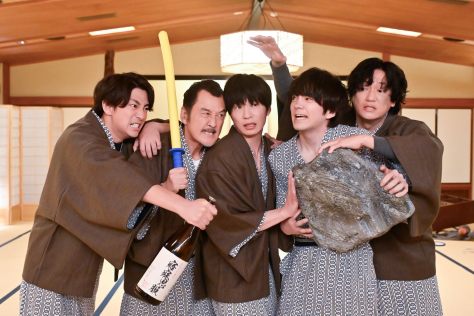
This season introduces two new characters that were not in the original. One is Izumi Kou (Lura Arata) and Rikudo Kikunosuke (Miura Shohei). Both are Public Security Officers who have gone incognito. Izumi begins to work with Haruta who bears an uncanny resemblance to his murdered partner and lover, which of course sets up all kinds of tumultuous developments. Lura Arata plays this part with such force that it is just astonishing to watch. Seemingly so deadpan in his approach to living, you know and feel his grief is overwhelming and overpowering. He is simply not functioning – just existing. In ways only this series can accomplish, Haruta helps him to recover and gets him to see that who is waiting for him is his friend and companion Rikudo. Miura Shohei, who is mesmerizingly handsome, plays this forlorn role with such grace and dignity. Always standing in the background waiting patiently for Izumi to break away from his past and maybe see a new future. Possibly with him in it. These two, for being introduced into this series, added a new dimension to the story and created another layer of influence that Haruta has over people. Even ones for whom he does not know well. He still manages to have them see things in themselves he sees, but they do not. In a remarkably short time that flows naturally and with ease.
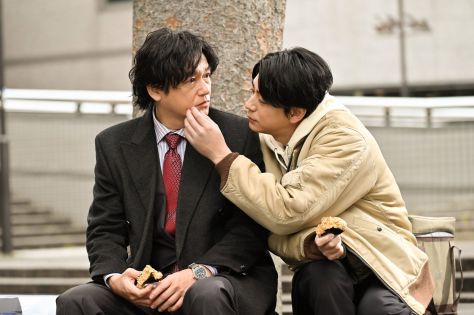
The cast has honed in on their roles and have mastered them as if they are really the characters. You get to see people, normal people. Relatable. I understood them. Sure, this is a comedy, but it has heart, and it has a poignancy like no other series. When, for example, Maku realizes that what Haruta needs is for him to see that what makes Haruta happy is the happiness he has given to others. So, when Maku gathers all those around him to share how each has been influenced by Haruta’s kindness, gentleness, and compassion, it became cinematic gold. It had me both laughing and crying at the same time. He is described ‘like a warm sunny spot.” There is no better compliment to give someone than that. It is simply pure joy and magic.
The screenwriting is just as sharp and clever as the others. In fact, it took it even deeper. It almost is too much to unpack in one season. We find out that Haruta is vulnerable and fragile. For example, when he hugs Maku and begs him not to leave him and wants to die before him as he cannot live without him and frankly does not want to, I sobbed and anguished. I completely understood. The writers put meaning into the nature and depth of love, no matter how it is expressed.
I laughed and I cried. A lot in this season. But most of the time I simply sat there and watched as if I was reading a good book. It gives you that kind of feeling.
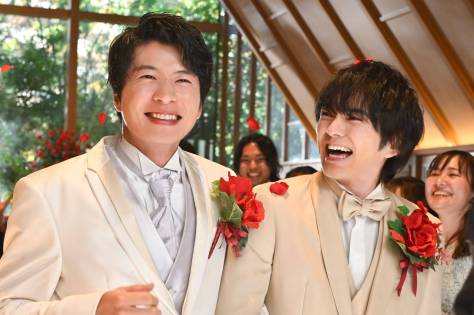
I shall be devastated if this is the last season. I want and need more. They are family. Their last words were, “We are family.” Nothing can be more earnest as this defines and expresses and shows every form of a family imaginable. This franchise is exemplary and, dare I say, an apotheosis in every sense of that word. You will find no better defining example of what a BL is or ought to be than in any of these series and especially in this latest season. Humor, poignancy, charm, affinity, love, and most of all human warmth.
What a ride it has been. Please tell me it is not over yet!
Rating- 5+ out of 5
Streaming on- Gagaoolala
 The BL Xpress