

This is an astonishing gem of a series that is packed with so much sagacity and common sense, it almost overwhelms your own sense of value. I have seen so many endings that are artificially contrived to be happy but here is one that does not. And I lamented as I really wanted one. But the reality is that not everyone in life has one. And in this case, the choice was made, deliberately, not to have one. Unquestionably, this series is one of the most powerful BLs I have seen this year. It is astonishing but unfortunately, will not be seen by many because it is a low budget production, the quality is imperfect in places, and the story is just too real for most BL fanatics. This story is about ordinary life. That in and of itself makes it unique and unfortunately not within the mainstream of the BL genre. Vietnam has a masterful way of presenting its series with genuineness and reality. This is no exception.
The surroundings are rural Vietnam. Bach (Minh Sang) has taken on the responsibility of caring for his younger brother Hao (Chau Vinh Tuong) after their mother passed away. Hao attends school while Bach eeks out a marginal existence for the both of them. Doing the best he can. Their close neighbor and friend has her nephew come from Saigon to stay with her. Tung (Gia Phuc) leaves his family there because they are unable to accept the fact that he is gay. Tung is employed at the same location where Bach works. Before long a close relationship develops, and both seem to be in love with one another.
Unfortunately, Hao the minute he lays eyes on Tung, falls passionately in love with him. To compound the matter, a former unrequited love of Bach named Quang (Anh Duh) teams up with Hao to try to break up the relationship between Bach and Tung. The two of them begin a nefarious set of plans to thwart the budding relationship between the two. Therefore, Quang could have Bach, who has no feelings for Quang, and Hao could have Tung, who only sees Hao as his ‘brother’.

However, what this majestic story is all about is an allegorical tale representing the 7 Deadly Sins – Lust, Gluttony, Greed, Sloth, Wrath, Envy, and Pride. We see it in various forms throughout. Sometimes in the individual characters or in the actions they take. Look for it. You will find each of these sins represented distinctly and clearly. And of course, the consequences of those ‘sins’.
Needless to say, if all 7 deadly sins have been committed, some moral course of action needs to be taken. And Bach took that action. He gave up his happiness as he knew that the only way to create the path to redemption was to stop its flow of destruction. Since he was the key, he was the one who had to make the decision.
There are no bad performances in this series. Only good ones. Perhaps some are stronger in certain scenes, but all deserve kudos for tackling very complex roles. So much had to be shown and conveyed in a short period and they all did what they had to do with distinction. I felt all their emotions. To be sure, the kissing scenes were a bit awkward and clumsily done, but I can forgive that – this time. But remember, you are presenting real life here. You must also be prepared to be more real in those scenes involving two guys kissing and not making it look so fake. The irony is that they all had good screen chemistry together. There is no need for such awkwardness in kissing.
While this does appear to be a low-budget production, it is still an obvious labor-of-love creation. It does have some production issues, however. The sound is uneven at times and has a strangeness to it. Frequently the background noises almost drown out the dialogue. I detested the unnecessary hitting to prove a point. Totally- uncalled for and unnecessary and is a form of assault. I do not care how the culture or society defines it as; it is still morally reprehensible. The overall series is quite short and therefore the story feels a bit rushed at times. That does not take away from some powerful interactive scenes that are peppered throughout the series, however.
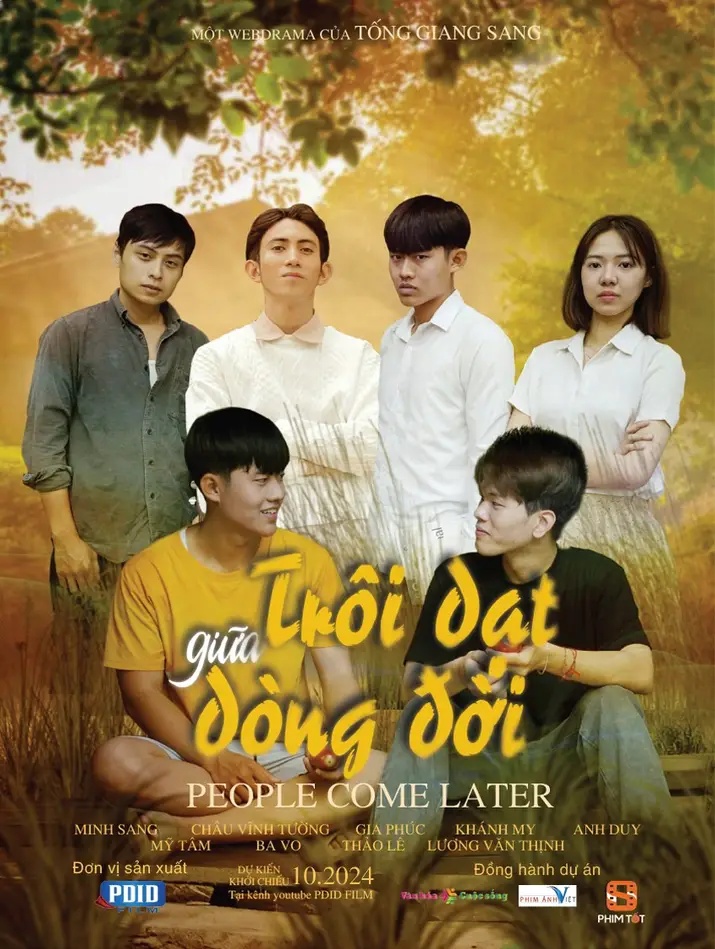
This series, baldly, has no happy ending. Honestly, we do not know if Bach and Tung will ever be together. But the reality is that life now and then favored us with a quick blessing of love, but individual responsibilities do not permit one the luxury of basking in that blessing for very long. Sometimes the responsibility of life casts a greater shadow over our lives and overwhelms our judgements. And it did in this case.
This story is by no means religious but presents moral dilemmas that needed simply ethical solutions to resolve immediately. How does Bach stop the pain? He sees only one solution. And it is a self-sacrifice that most of us in the West would not have made or if made, would have been bitter with life afterwards. He made it in the only way he knew how. Bach must learn to live with it, and in the end, with he and his brother beginning to smile, you know, for him, it is the right one. The healing has begun…
This is a remarkable and an outstanding series that unfortunately will be overlooked. Please give this one a try. Disregard the production issues and really see the story. Please. The whole series is just over 2 hours long.
These gems from Vietnam are so often disregarded but are some of the best BLs out there in terms of storytelling.
Rating- 4.5 out of 5
Streaming on- PDID Film YouTube Channel
 The BL Xpress
Gracias por tu reseña; buscaba una serie BL diferente y creo que voy a mirarla. Saludos desde Argentina.
LikeLiked by 1 person