

The title of this movie is aptly named. Aichaku literally means in Japanese ‘attachment’. But an attachment to an object that is more like a feeling of affinity- what the object means. It takes on an emotional attachment. And this movie is certainly that. It is a movie filled with a lot of emotional bonds.
However, it takes a long time for the story to get somewhere though. While the first half was interesting, even informative, it was mundane and uneven. It is a story about a focused American gay man, teaching English in the rural countryside of Chiba, Japan. His name is Lucas (Christopher McCombs) who strains to save all his money for something, to the point of forgoing almost all other pleasures. He bikes past an abandoned restaurant on his way to teaching every day and stares in, and we assume that is what he is saving for.
The other protagonist is a half Japanese half American man named Ken (Christopher Nishizawa) who works for his uncle. Quiet, reserved, and focused on wanting to learn English. We find out later that he wants to learn English so that he can someday communicate with his mother who was an American. How he was left to be raised in Japan is a narration told softly and with simple visual effects that are touching. It is obvious Ken feels that he has something missing from his life which he is craving.

The story takes a while to develop. A bit too long in my opinion. The problem I had with this movie is its presentation of the characters. They did not seem real, although their problems certainly were. Lucas tended to be whinny and fit into the cliché niche of an American gay. Sometimes appearing to be very shallow as well. And why they presented him as NOT seemingly understanding Japanese or speaking the language until nearly halfway through the movie made no sense to me. It deflated the movie. This story would have been more effective had the audience realized he could speak Japanese, rather fluently, from the beginning. (This actor is quite fluent in Japanese and has studied the language and lived in Japan for several years). The movie would not have seemed so disjointed and sundered. As soon as he started to speak in Japanese, he found and showed a fusion to his surrounds. The whole feeling and attachment to the movie changed.
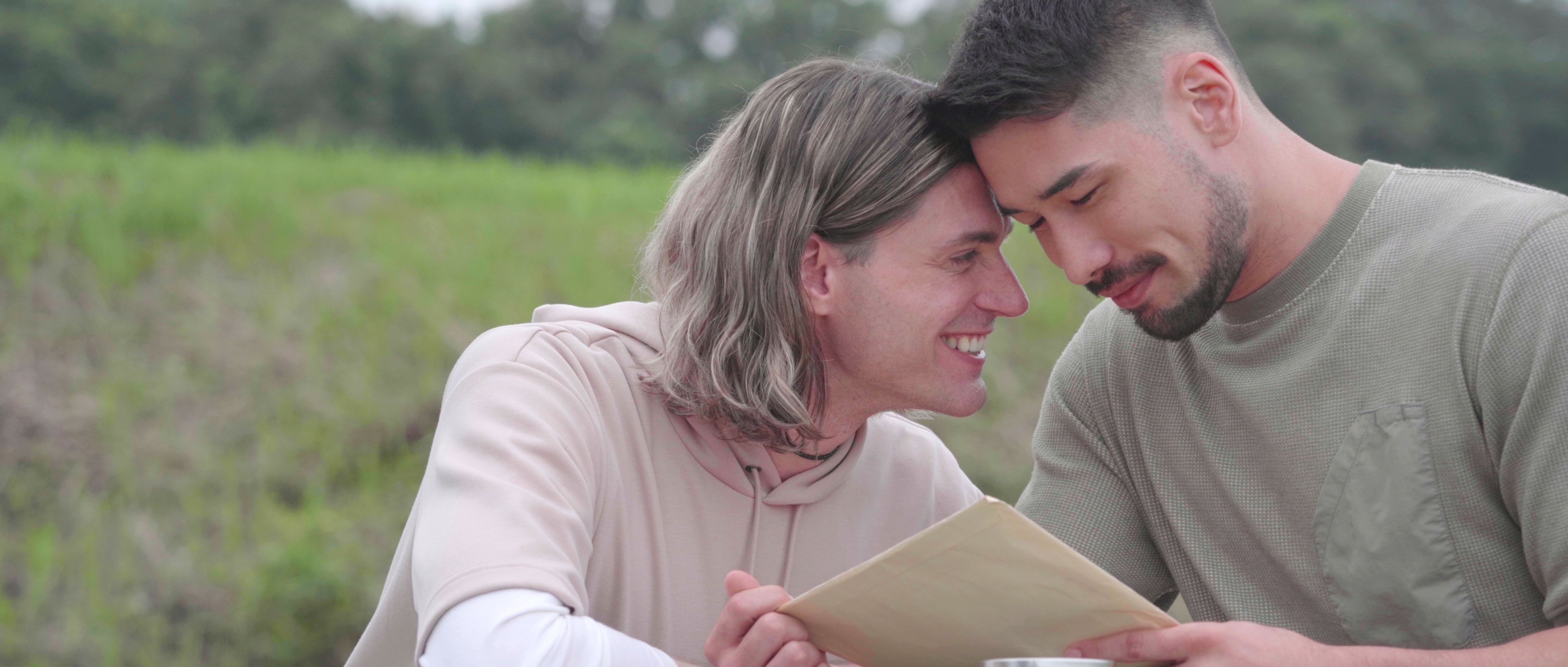
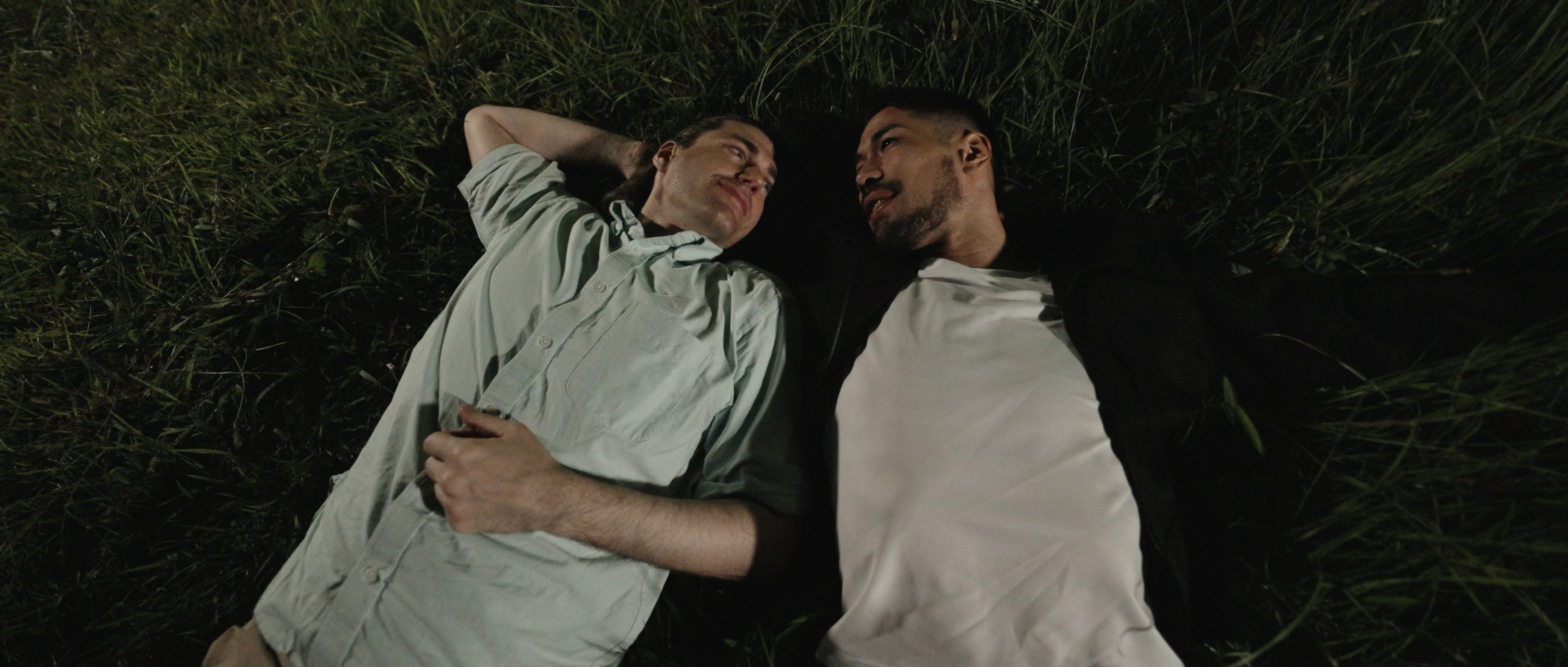
When he did finally speak Japanese is when he met Ken. Then the magic and the ‘aichaku’ of this movie took hold. We felt instantly they had a bond. Both in terms of temperament and sexual attraction. There was a naturalness about their fit together. While the story does feel rushed at this point, it makes sense essentially on the strength of the fine acting of Christopher Nishizawa and Christopher McCombs. It is not overplayed and felt organic and genuine. We could sense that Ken had been struggling with trying to identify who and what he was until he met Ken. There was a sincerity about their love that became authentic. While the overall screenplay was a bit melodramatic, it works because these two make it work in the second half. The underplay of strong personalities worked in this case.
While there is some fine acting from the main leads, it is the supporting performers who essentially walk away with the accolades. They are adorable in the sense that they give this movie the right balance and diversion to make it funny, cute, and more relatable. Marie (Yayoi Fujiwara) is the daughter of Lucas’ landlady, Yoshiko (Kaori Takeshita). Both mother and daughter have this ‘cat and mouse’ relationship that is amusing at the same time rather enlightening. Marie ends up being a pivotal character to being the solution to Lucas and Ken’s dilemma. I shall not spoil that climax that for you. With the mother being the wiser to what was going on, proving the axiom to never underestimate the intuitive powers of a mother. Speaking of mothers, Lucas’ mother, Cathy (Cynthia Cheston) also, provides just the right amount of nurturing for her son and also for Ken. Without the strong and pivotal performances in these roles, this story would indeed have been diminished. However, who surprised me the most was Ken’s uncle Nobu (Koichi Sakaguchi). Appearing to be stern, distant, and cold, he all along has been waiting in the wings for Ken to finally be himself. And when Ken finally does, Nobu becomes the father Ken lacked. It is a beautiful transition and a true metamorphosis from impersonal to nurturing communion occurs.
This is a story about dreams where destiny seemed inevitable. Yet, destiny is not a given and it may not happen at all, no matter how hard one believes. Then the synergy of two men who happen to meet, fall in love, brought strengths with them to make each of their dreams a reality. While the first half was slow-moving, the second half carried the story to fruition. It became relatable, less centrist to one or the other character, and together combined to make dreams happen with a result being a new beginning for both men. Overall, the movie ended up being a very moving and poignant story with periods of humor and touching interactions.
How realistic or Americanized is this movie? Honestly, I do not know. Given that it takes place in rural Japan, I am not sure the utopian vision presented is or can be such a reality, but it sure did make for a likable and entertaining story.
It is a good movie with solid performances and a very engaging premise. It is a nice way to spend a leisure afternoon.
Rating- 4 out of 5
Streaming on- Amazon Prime
 The BL Xpress