

When the yesterday you thought you understood twists in on itself, when every choice, every loyalty, every moment becomes part of something far more complicated, the only way forward is to either begin again or break free.
In the Thai BL Yesterday, Veir and Kelvin take matters into their own hands.
Adapted from a Chinese web novel by Feng Nong, the series drops us into a world where power and inheritance shape everything, and love is rarely clean. Veir, played by Fort Thitipong Sangngey, stands as the confident heir to VPG Group, polished, strategic, and used to winning. Opposite him is Kelvin, portrayed by Peat Wasuthorn Chaijindar, the overlooked son of a rival family, quietly navigating a household where survival depends on outmaneuvering his own blood.
Their connection begins with weighted glances, warnings, and shared moments that somehow feel premeditated. What initially appears to be curiosity unfolds into something far more deliberate. Kelvin doesn’t simply fall for Veir, he studies him, anticipates him, obsesses over him, and, eventually, entangles him.

From the start, Yesterday plays with perception. Veir comes across as a charming opportunist, someone who knows how to use his image to his advantage, but beneath that is a softness he rarely allows anyone to see. Kelvin, on the other hand, appears fragile, but that vulnerability masks a deeply rooted need for control, revenge, and, most dangerously, possession. Neither man is exactly who he seems, and that tension becomes the foundation of the entire story.
As with my first review, it’s obvious these two are not really good for each other. But that’s beside the point. What makes Yesterday work and what makes it hard to turn away from is how completely it commits to that imbalance. This isn’t a story interested in ideal love. It leans into obsession, manipulation, and emotional volatility without softening the edges. The push and pull between Veir and Kelvin is sometimes uncomfortable but undeniably magnetic.
After finishing Yesterday, my initial impression hasn’t changed much. If anything, it’s stronger. The story remains a tangled web of changing loyalties, psychological games, and power struggles colliding headfirst with love, even when that love doesn’t look typical. In real life, Veir and Kelvin would probably be a cautionary tale. In the series, however, they’re something else entirely. Somehow, I not only found myself intrigued and invested by their push and pull, I found myself rooting for them.
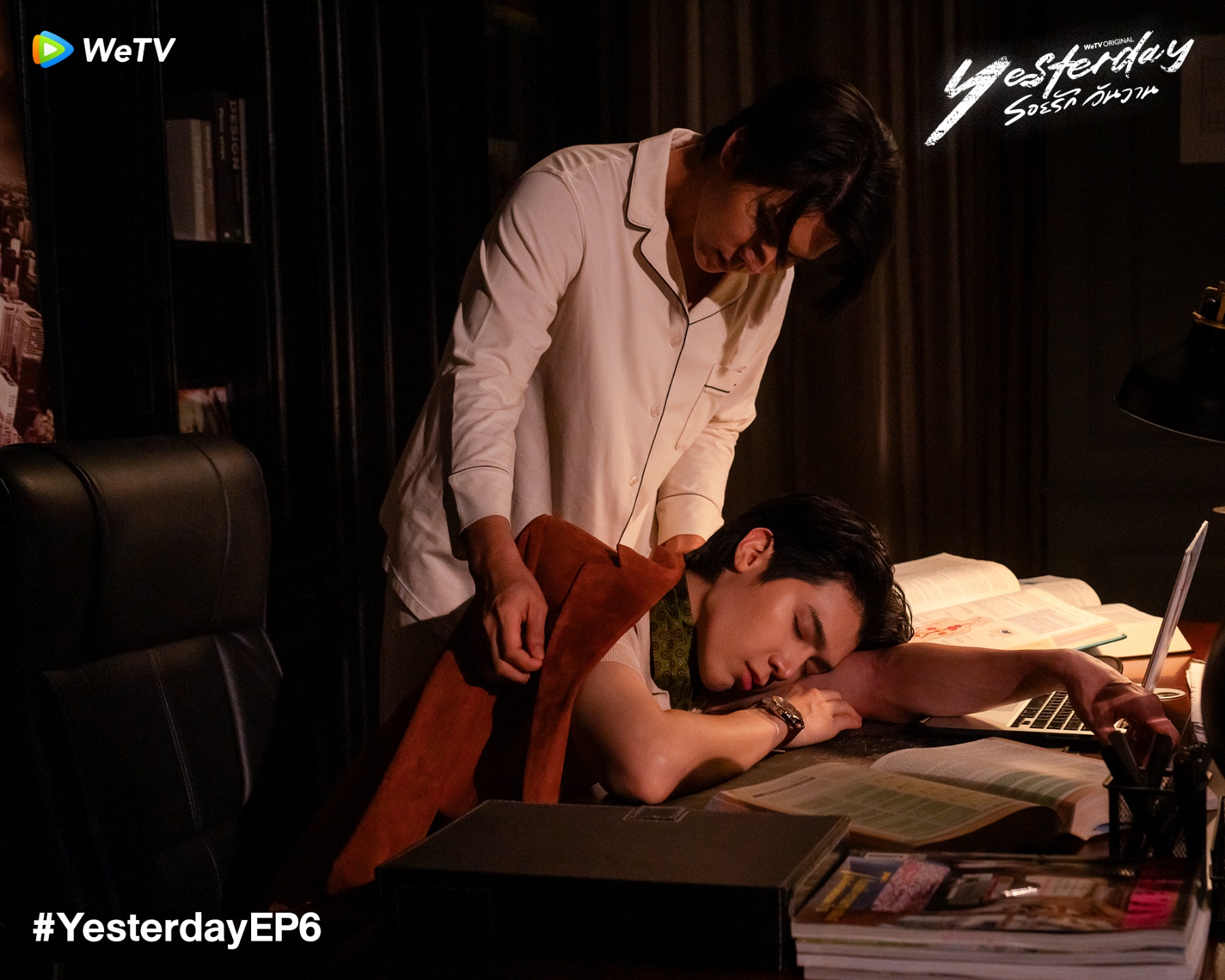
A large part of that comes down to Fort and Peat. They play off each other with ease, which makes even the most chaotic emotional scenes feel strangely natural. Peat takes on a role that requires him to balance instability with vulnerability, and he does it impressively well. Kelvin is unsettling at times, but his need to be chosen is also deeply human. Fort matches Peat’s energy by peeling back Veir’s confidence to reveal the soft heart he keeps hidden beneath, creating a dynamic where both characters are constantly circling each other, testing boundaries, and crossing them anyway. Their chemistry carries much of this series, and it needs to. Because, let’s face it, Veir and Kelvin’s relationship teeters on the impossible. And yet, somehow, on screen Fort and Peat make it feel not only possible but necessary.
It also helps that the series doesn’t rely on just one romance. Happening alongside Vier and Kelvin’s story is the steadier connection between Nana (Friend Dina Pophring) and Lalin (Ninenine Natthanicha Srisawasdiphalodom). Where Veir and Kelvin struggle with trust, Nana and Lalin build it. Their communication feels much more open, their affection mutual, and even when things aren’t perfect, there’s a sense of “I’ve got you” that balances out the intensity of Veir and Kelvin. They’re not without complications, but compared to the main storyline, they become a good place to catch a breath.
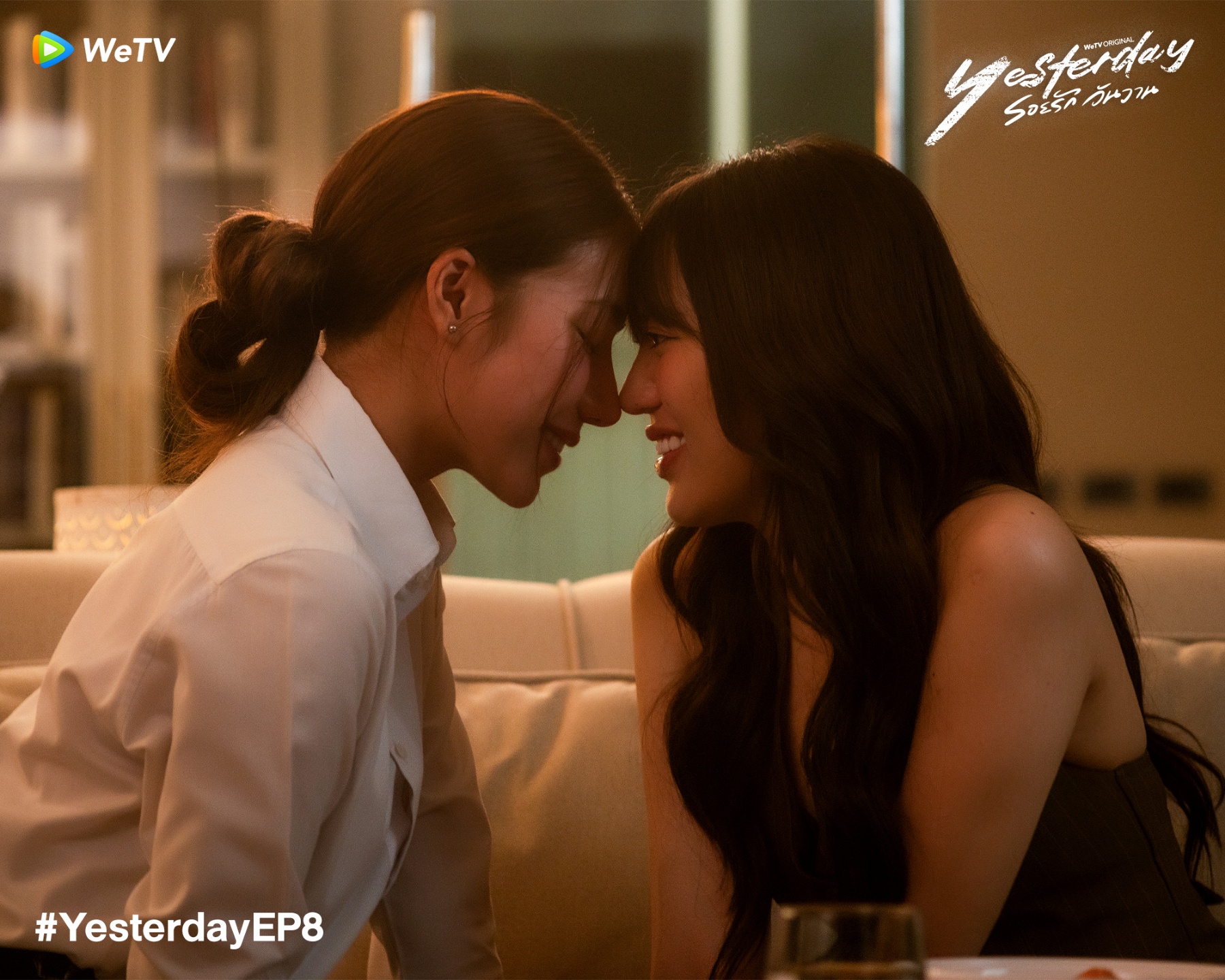
The storytelling is layered with so many twists that breaking them down would take away from the experience. The unpredictability is part of the draw. It keeps things slightly off-balance, which fits the tone of the series.
All in all, Yesterday is a second-chance love story, but not the kind that asks for forgiveness. It asks viewers to sit with the mess, the mistakes, the damage, and still find something worth holding onto.
And somehow, it works. I wasn’t sure it would at first, but somewhere along the way, it started to come together. Even as it leaves certain threads open, especially with Kelvin’s brother Ken, the series manages to close on a note that feels satisfying.
For a drama that can have you questioning everything one minute and completely invested the next, Yesterday delivers an experience that’s equal parts unsettling and addictive. If you’re willing to follow it into its darker corners, it’s worth the ride. Check it out now on Tencent Video / WeTV.
Rating- 4.5 out of 5
 The BL Xpress