

2022 can definitely be touted as the “Year of Queer Representation”.
With shows like Love Victor, Young Royals, Heartstopper, Our Flag Means Death, Elite, Uncoupled, Heartbreak High and Interview with Vampire making waves across the globe with their active LGBTQ representation, the breakthrough is subtle yet definitive. Like two sides of the same coin, The Sandman drew applause as well as criticism; while author Neil Gaiman’s vivid depiction of the homophile diaspora was applauded by staunch supporters, the critics staged an uproar with their “Woke Agenda”. Today, we are here to talk about the divergent plotlines that somehow converge on normalizing the queer act; they are a part of the narrative and there is no special emphasis on their inclusion. They are as much a part of this universe as the “Straights” (which is delightfully subjective).
“We didn’t really change anything, that was how they were when I wrote them, that’s always how I’ve written characters…When I was writing it—and today—I had gay friends and I had trans friends. I wanted to see them represented in the comics that I was writing, and it felt to me like if I wrote comics and left them out, then I wouldn’t be representing my world, or the world that I was in, or the world I was perceiving accurately, bravely, or truly. And that’s the point of art. So, for me, it was just a given.”- Neil Gaiman, Queer Forty
The Cult Leader’s Gay Son
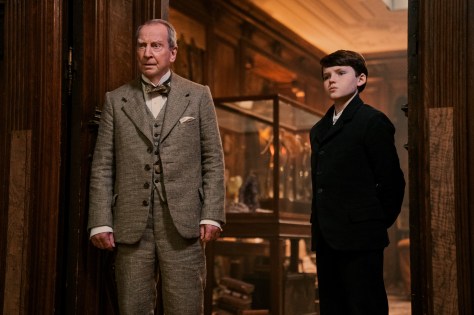
We are talking about an era where homosexuality was a taboo, not so much in existence, and denial was rampant. So, imagine my surprise when The Sandman’s pilot episode featured a gay man, Alex Burgess (Laurie Kynaston), who was more confused about his adoptive Father’s maniacal behavior than his own sexuality. The Sandman’s storyline delves into the realm of the Dreaming, governed by one of the Endless, Morpheus/Dream. While Tom Sturridge’s portrayal of Dream takes centerfold, it is the amalgamation of LGBTQ characters that adds a distinct flavor to this risque adaptation. So, although Alex does follow his Father’s doctrine and imprisons Morpheus to fulfill their diabolical schemes; he is rather hesitant and entirely unconvinced. His clandestine affair with Paul leaves a lot to be desired (but we cannot be greedy), since their relationship is just the opening act. Paul’s closeness to Alex affords him the luxury to release Morpheus from his century old confinement. Although I did feel bad for Alex because Morpheus condemns him to eternal sleep; the punishment advocates the simple truth- Alex didn’t need to follow in his Father’s footsteps.
The Bisexual Supernatural Detective

Jenna Coleman graces the silver screen with a subtlety that is unknown to an exorcist; Johanna Constantine is beautiful, stoic and also mysterious. Her charming personality attracts Morpheus’ attention (while he is trying to search for his tools of power that have been looted and sold while he was imprisoned) and their banter is entertaining. But the gears switch when Constantine reveals that Morpheus’ pouch of sand is at her ex-girlfriend’s residence. Surprised? Quite literally, I was little shell-shocked by this sudden twist; because The Sandman throws in queer characters at the most random turns. They are unexpectedly refreshing and their inclusion doesn’t necessarily dislodge the pacing of the narrative. So, while Constantine attempts to exorcise her ex-lover of her forbidden desires, it is Morpheus who sets her free. Constantine’s love for her ex-girlfriend is as recognizable as her subtle attraction to Morpheus. Was interesting to watch, as I munched on my popcorn while being surprisingly astonished by their dynamics!
The Non-Gender Conforming Devil
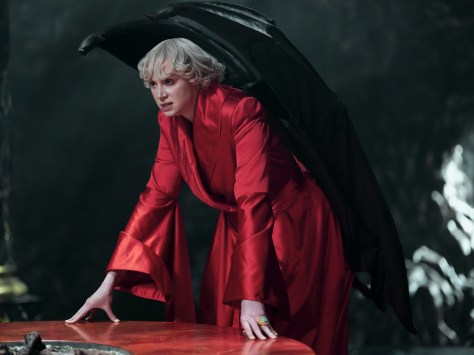
The gender ambiguous portrayal of Lucifer Morningstar has been frivolously included in the “Woke Agenda”. The fact that Gwendoline Christie has already played gender non-conforming roles in popular dramas like Game of Thrones and Star Wars didn’t deter the critics; it just added to the fuel. Lucifer is introduced in the fourth episode when Morpheus descends to hell to retrieve his helm. Problems ensue when Morpheus realizes that his helm is currently owned by an egoist Hell Lord who challenges Morpheus and then inducts Lucifer as his champion. The ensuing battle of brains between both deities is intriguing and chilling. Morpheus eventually wins the challenge by invoking “Hope”, a sentiment that Lucifer can’t fight. Humiliated by the defeat, Lucifer vows to kill Morpheus. Throughout the entirety of this blowout, Lucifer is never addressed by gender specific pronouns or titles, something that confirms Gaiman’s assertion that these characters were just written the way they are depicted onscreen in the adaptation.
“We never repented, we never stopped putting the gay characters in and far as we know, the boycott still continues,”
“The Sandman is right here, right now, and people are loving it,”- Neil Gaiman, CNN Phillphines
The Diner Gory
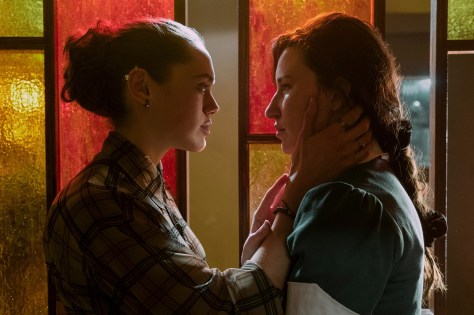
The fifth episode is perhaps the most shocking and also gory; as John Dee (David Thewlis) jeopardizes the world order in his endeavor to find “Truth”. The character is crazy (having spent decades in a mental institution) and is pragmatically insistent on saving humanity. Having possession of Morpheus’ ruby drives him insane and he decides to test its limits on the poor hassled souls in a local diner. The episode is not for the weak-hearted; but what stood out was the LGBTQ representation. John uses the ruby’s powers to force them to act on their hidden desires. As such, the diner cook Marsh (Steven Brand) reveals to his fellow waitress and girlfriend, Bette (Emma Duncan) that he was only dating her so he could sleep with her college going son. Brokenhearted Bette seeks refuge in Jude (Daisy Head), another customer who seems to be a regular. From the second Jude enters the diner, Bette’s eyes keep following her; simply because she can’t resist the gossip. It seems like Jude is going through a rough phase in her relationship and Bette strongly disapproves of her girlfriend. Bette feels that the said girlfriend isn’t good enough for Jude. As such, both broken souls end up kissing while they share their woes. On the other hand, another regular, Garry (James Udom) has a huge showdown with his controlling CEO wife, Kate (Lourdes Faberes). He walks into the kitchen lamenting his life’s choices in front of Marsh, who is only too eager to provide his services. The entire episode circumnavigates around the fact that John forces the diner crowd into a sexual depravity irrespective of their orientation and ultimately leads them to their death. John revels in exerting the importance of truth- Sexuality is much more fluid than we think, and hidden desires led to pent up tension. While his prejudices seem reasonable, acting on those desires might tear down the world order. As such, Morpheus destroys the ruby and condemns John to life long slumber. The premise of this story board was flabbergasting, revelling, and entirely despondent.
The Flamboyant Drag Queen

Portrayed by John Cameron Mitchell, Hal is Rose’s friend and also the owner of the B&B in Cape Kennedy. Hal mostly moonlights as a drag queen and cabaret performer. Apart from his close friendship with Rose, there isn’t much importance attached to this character; but the one thing that grabs your attention is his flamboyant nature. He is openly gay and, as a drag queen, his performances are highly entertaining. Hal’s portraiture feels like a wake up call; because mainstream media always approach LGBTQ characters with caution. It was heartening to see a drag queen sashay around winning hearts and being her stunning, glorious self!
Desire Could Be Dark
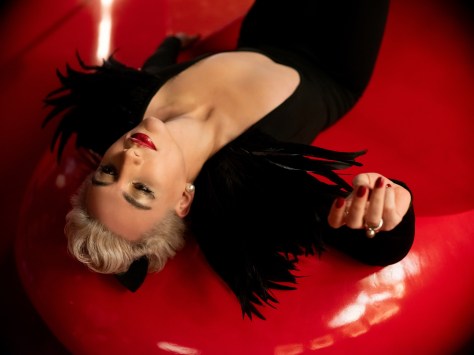
“One of the first things Neil ever told me about his character was that he never played Desire as a villain. Desire is the hero of their own story.”- Mason Alexander Park, Netflix
Desire is just one of those nefarious characters that steal your attention within the limited screentime they have. Aptly portrayed by nonbinary actor Mason Alexander Park, Desire is hugely a genderless character. They mostly replicate into forms that benefit their calling. So, it isn’t a surprise when Desire appears in Unity Kincaid’s dream as a golden eyed man and impregnates her. Desire’s entire existence hinges on destroying Dream, with leads to the emergence of a vortex, Rose Walker (Kyo Ra). If Morpheus unknowingly kills Rose, it will lead to his destruction (he will be executed for familicide). Although their issues aren’t explained, it’s obvious that Dream doesn’t share the same sweet relationship with Desire as he does with Death (Kirby Howell-Baptiste). Desire, as their name suggests, are the succulent manifestation of human greed and vanity; something that ties them to the realm of Dreaming; because obviously that’s where human manifest their desires. There seems to be a lot of bad blood between the twins, Desire & Despair (Donna Preston) and Morpheus. The first season ends on a shocking note as we watch Dream plot something sinister against Morpheus. Personally, I really enjoyed the way Mason Alexander Park has managed to infuse this character with a mischievous energy. Coupled with their nonchalant attitude, Desire is irrevocably desirable!
The Handsome Nightmare

“I felt like he was an outsider, something that I definitely can relate to. I’m sure many people can relate to a person that just wants to belong.”
“It’s not really any sort of set demographic. He’s just so fascinated with humanity itself and all the different flavours and tastes that come along with that.”- Boyd Holbrook, Digital Spy
A serial killer par excellence, The Corinthian (Boyd Holbrook) is literally Morpheus’ worst nightmare come alive. We aren’t jesting because he is really a nightmare from the realm of Dreaming. He is obviously the antagonist since the storyline comes alive because of this notorious character. Bored with his subjugate existence, The Corinthian escapes to the realm of Humans. Morpheus teleports to the human realm to arrest him and all hell breaks loose. Corinthian is quite fascinating; he isn’t afraid of Morpheus and doesn’t find reverent. In fact, he is quite annoyed with Morpheus’ meddling nature and plays an active role in Morpheus’ centuries long imprisonment. Also, Corinthian’s sexual orientation is crystal clear- he is gay and doesn’t shy away from murdering the harmless victims that grab his attention. But he has a type and although he is a serial killer, Corinthian doesn’t kill incriminating. Maybe that’s one of the reasons why he doesn’t kill Rose’s gay roommate, even after having sex with him. The Corinthian acts in strange ways that’s difficult to understand and although he is eventually killed by Morpheus, we never know what the future holds!
The Sandman must be applauded for its daring and realistic portrayal of the LGBTQ community; something that will set into motion future accurate representation in upcoming shows. Its gutsy storyline coupled with intriguing characters will definitely get you invested in this series!
Streaming on- Netflix.
 The BL Xpress