

Grief … anger … confusion.
These emotions often go hand in hand. Human emotion is a strange thing. Movies, music, and television tend to focus the most on romance, on love and the buildup to it—the tension, the afterglow, the angst.
It focuses less often on anger; when it does, it isn’t pretty, especially when love happens during the angry stage of grief or figuring oneself out.
Youth is different for everyone. Some people look back on being young, and they have fond memories of it: lots of laughter and excitement, the anticipation of crushing on someone, the comfort of being with friends. Others look back on it in confusion and fear of abuse or expectation, of grief and misunderstandings, of trying too hard to be someone everyone expects while losing who you want to be.
Adapted from the webtoon of the same name by Keul Ra Jyu, the Korean BL Jazz for Two places viewers directly into the more hostile emotions of youth. It’s easy for some to relate to. Not so much for others, and I think how one feels about the series depends heavily on how well one relates to what’s happening on screen. I spent most of my youth ensconced in violence and confusion. Domestic abuse at home. Homophobia in the small Southern town I grew up in. Bullying and assault by kids I never want to come face-to-face with again. Grief over losing my mother, the only person I felt understood me.
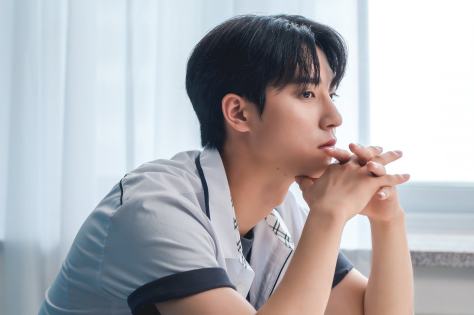
Youth was lonely. Scary. Resoundingly angry.
And while Jazz for Two was trope-y in moments, the overall deeper emotions it explores bled through. And I related. The series explores two very different relationships, that of Han Tae Yi (Ji Ho Geun) and Yoon Se Heon (Kim Jin Kwon) which is centered more on grief and expectation. And Song Joo Ha (Kim Jung Ha) and Seo Do Yoon (Song Han Gyeom), which is centered more on confusion and violence. There’s a lot of lashing out in Jazz for Two. It starts on a slippery path, with two of the main characters being easier to root for (Se Heon and Do Yoon) and two main characters who could be easier to understand (Tae Yi and Joo Ha).
In retrospect, the series would have done itself a favor by adding a subtly visible but nuanced vulnerability to Tae Yi and Joo Ha in the earlier episodes, which would have made it easier for viewers who haven’t experienced the darker side of youth to catch a glimpse of, or at least try to find, the more human aspect of their characters that develops later. However, Tae Yi and Joo Ha never turned me off. Instead, with each passing episode, I found myself more and more invested in Tae Yi and Joo Ha’s growth, the love that pulled them both out of their anger and confusion, and the confidence Se Heon and Do Yoon found in being the two young men who saw beneath Tae Yi and Joo Ha’s anger to the root cause of it.
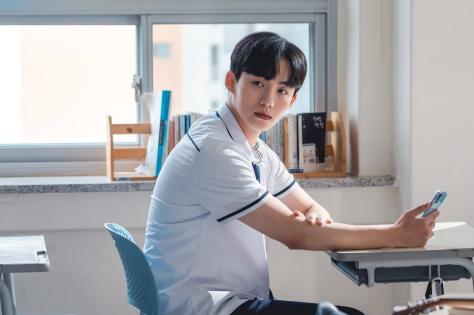
All while surrounded by jazz music. Jazz is a rich music that is impossible to contain, full of sensitivity and no clear definition. Music meant to be felt with a defining sense of freedom, especially in improvisation. And that makes it a beautiful backdrop to a story about four boys trying to find freedom in themselves.
It takes talented writers and actors to pull off a story that combines jazz and complex human emotions and intertwines them. Jazz for Two attempts to do this. And, in my opinion, succeeds with the time limit and budget they had to work with. There were moments when I saw the brilliance it hoped to pull off and moments when it didn’t quite hit the right notes. And yet, I was impressed by the series. Much like how Tae Yi saw the potential in Se Heon’s piano playing, I saw the potential in what Jazz for Two wanted to accomplish.
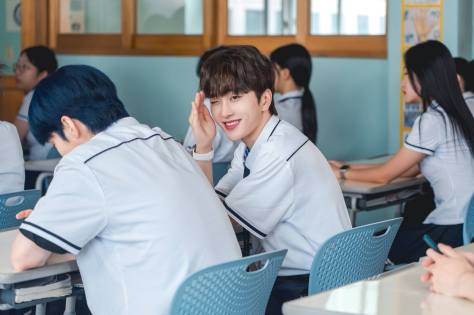
All in all, I liked Jazz for Two much better than I expected. The actors, especially in the more emotional scenes, managed to pull off the characters’ chaotic emotions. The good chemistry made it easy to fall into the growing feelings on screen. Tae Yi and Se Heon’s love story was easier to stay involved in, but I wanted to know more about and better understand what was happening with Joo Ha and Do Yoon. My biggest complaint with the series is that I wish the writers had more time to flesh out why and how Joo Ha became so angry while delving deeper into his confusion over his identity and his developing relationship with Do Yoon. But me needing more of Do Yoon and Joo Ha speaks volumes about how well their characters managed to imprint themselves on my heart.
Jazz for Two crescendos on a somber note by confronting Tae Yi’s brother’s suicide before ending in triumph, delving into the darkness of Tae Joon’s suicide and depression before ending on Tae Yi and Se Heon’s new beginning, acceptance, and possibilities.
And that left a deep impression on me.
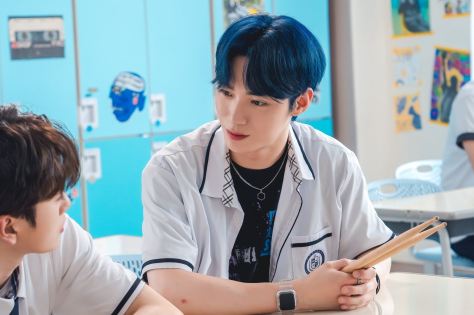
Despite the production’s choice to blur Do Yoon and Joo Ha’s kiss, which probably had more to do with someone’s management or contract than the production, I was thoroughly impressed and left wanting more.
For a series that touches on the darker side of youth and self-discovery while also finding freedom in itself, check out Jazz for Two now on Gagaoolala and iQiyi.
Rating- 4 out of 5

