
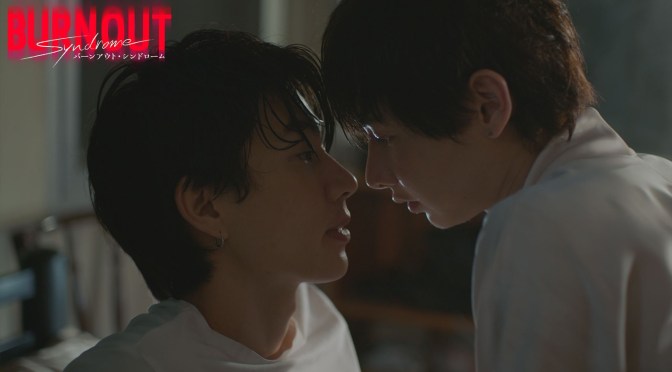
The world thrives on contradiction. Tenderness alongside cruelty, excess beside scarcity, ambition tangled with ruin. Every life drafts its own narrative in the margins of that chaos with some stories lingering in a way that burns.
The Thai BL Burnout Syndrome is one of those stories. It’s so beautiful it hurts. It isn’t loud about what it’s doing. It isn’t an overly critical piece nor is it overly tragic or romantic. It simply stays with you frame by frame, until you realize it has been examining you as closely as you’ve been watching it.
When I first wrote about the opening episodes, I talked about exhaustion and how easy it is to burn out in a world that values output more than humanity. At the time, it felt very atmospheric. A moody and jazz-soaked melancholy set around three men who were all, in their own way, burnt out.
But as the contradictions deepened, so did the story.
Now that the series has ended, it’s still the atmospheric piece it started out. But it’s also more. Burnout Syndrome isn’t just about being tired. It’s about what happens when art is extracted as well as loved. The series follows Jira (Gun Atthaphan Phunsawat), a struggling artist whose sensual, minimalist works feel exposed and restrained. His paintings are bodies without excessive detail, emotion without apology. There’s hunger in them for touch, for recognition, and for survival. Jira’s poverty and passion isn’t romanticized. It’s instinctual and relatable. The way Jira keeps creating even when the world keeps reducing his effort to failure is deeply human.
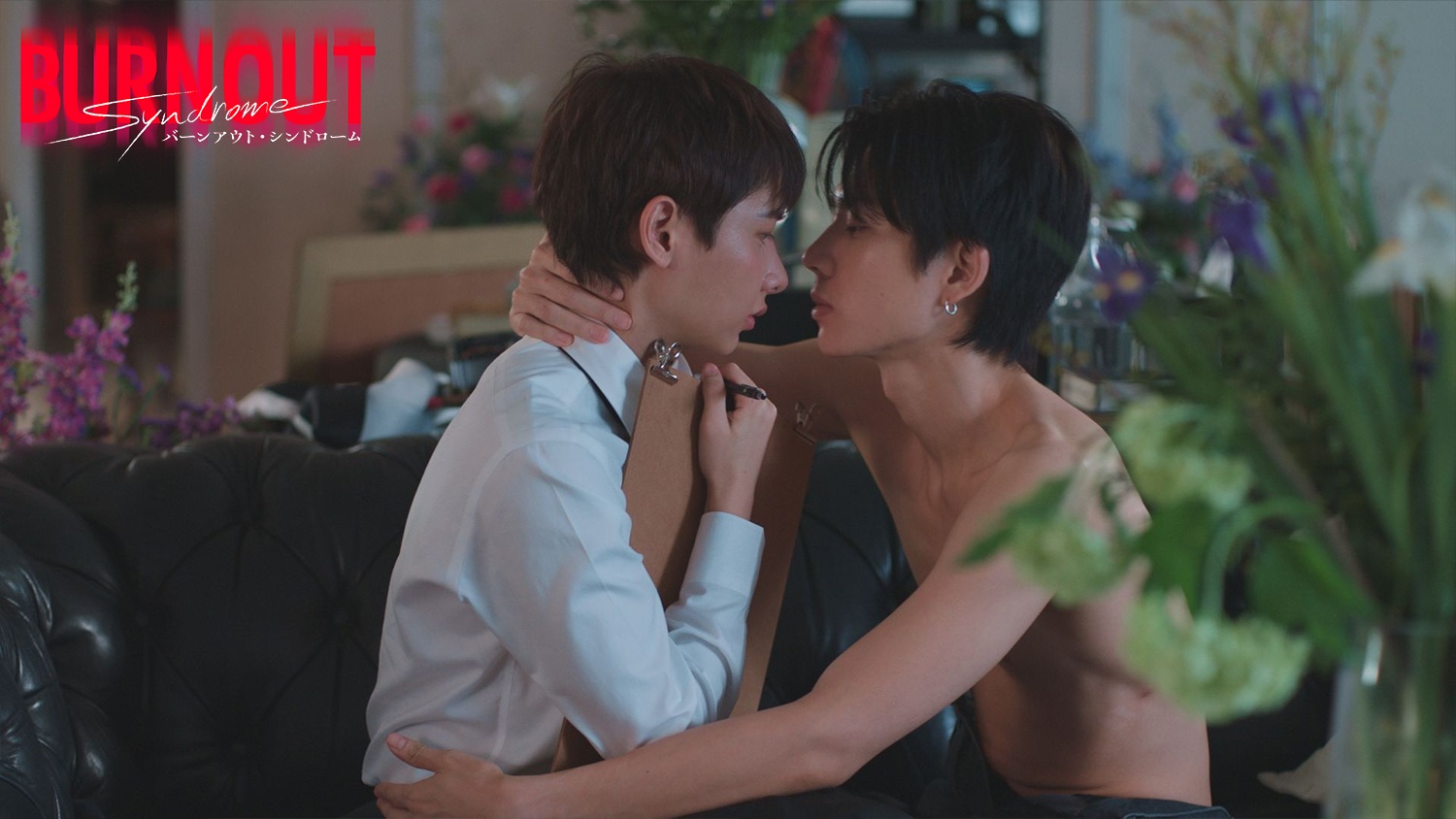
But Jira’s story isn’t an isolated one. Thus enters Pheem (Dew Jirawat Sutivanichsak), a burnt out AI coder whose quiet weariness leaps from the screen. It’s this weariness that brings him and Jira together at the Burnout Bar before bringing Jira into Koh’s orbit. Koh (Off Jumpol Adulkittiporn) is a reclusive tech mogul and Pheem’s employer.
And they all couldn’t be any different, especially Pheem and Koh.
Pheem exists in liminal space, too drained to leave his job coding AI but too afraid to abandon stability. While his is the type of “drained” that’s easy to sympathize with, Dew’s performance doesn’t beg for sympathy, which I appreciated. Instead, it highlighted the pain of finding someone who eased his turmoil and then losing that someone to the oppression that’s weighing him down. Every time Pheem shares the screen with Jira, the atmosphere softens even as it tenses. It’s easy to feel the version of life Jira could choose if he was available.
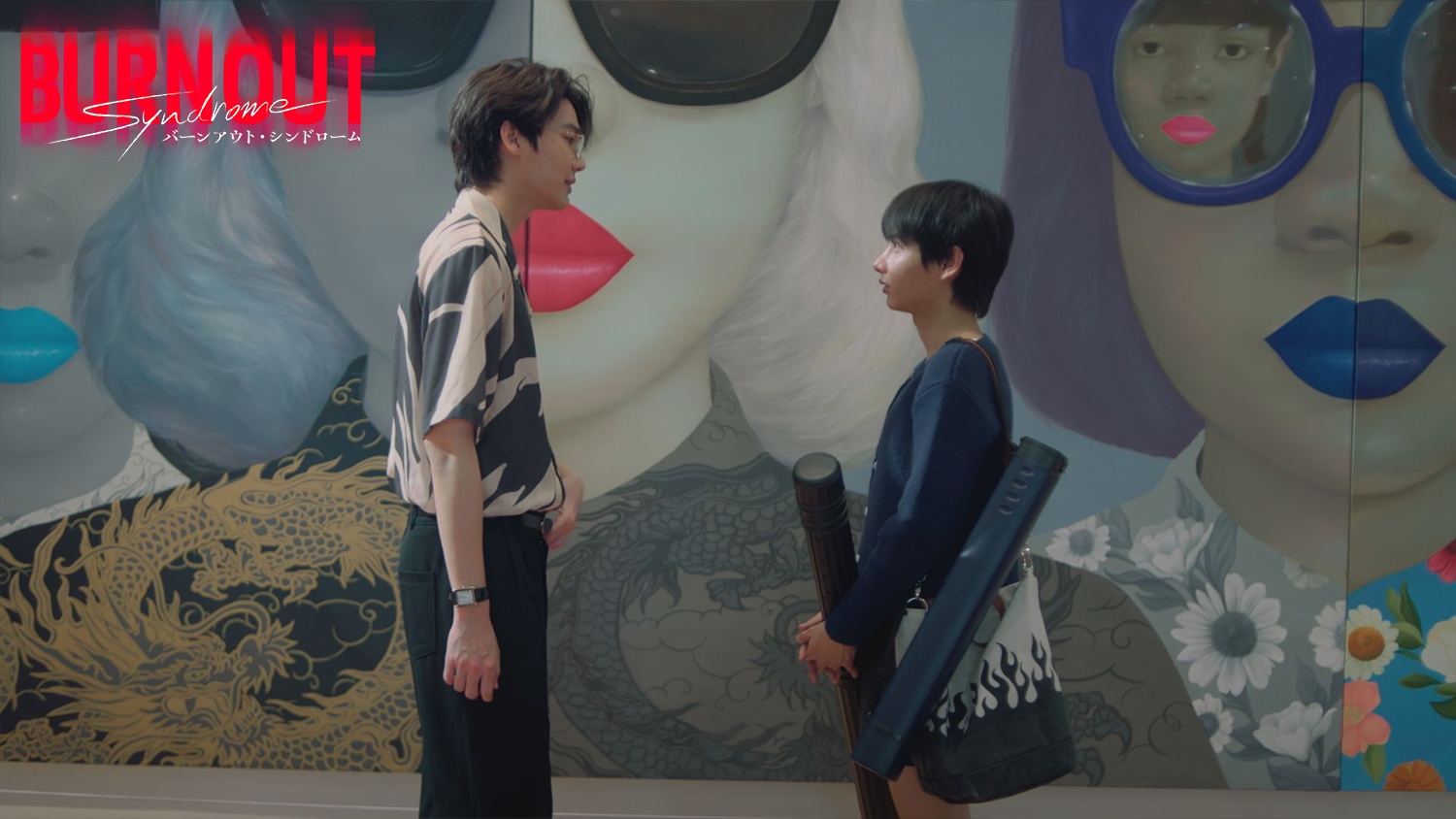
But then there is Koh.
Off delivers a performance that feels almost frightening in its restraint. Koh is a distrustful insomniac who is emotionally fractured by a past shaped by betrayal and financial ruin. He trusts his own technology more than he trusts people. His home is cluttered with wires and machinery, darkness and unspoken thoughts. From the beginning, he’s a man who’s replaced intimacy with algorithms.
And yet he finds he’s able to sleep near Jira.
At first, Koh wants Jira close because Jira soothes him, and he’s fascinated with the images Jira paints of him. Being seen through art is different than being seen through data. But Koh is still a capitalist at heart, not so much out of greed alone, but out of fear of collapse. And that fear leads him to betray the one thing that made him feel human: Jira.
When Jira discovers that Koh has secretly used his artwork to train his AI, the series shifts from a moody romance to a symbolic deep dive on ownership, consent, and the commodification of beauty. It continues the quiet conversation with The Picture of Dorian Gray that I mentioned in my initial review. While I’m not sure if the story itself was inspired by Wilde’s work, it holds the same enigmatic aura and weight. In Wilde’s novel, a portrait absorbs corruption while the man remains outwardly unchanged. Here, the corruption isn’t trapped in paint, it’s hidden in code. Koh’s AI becomes the modern portrait. Built from beauty. Fed by intimacy. Detached from its creator.
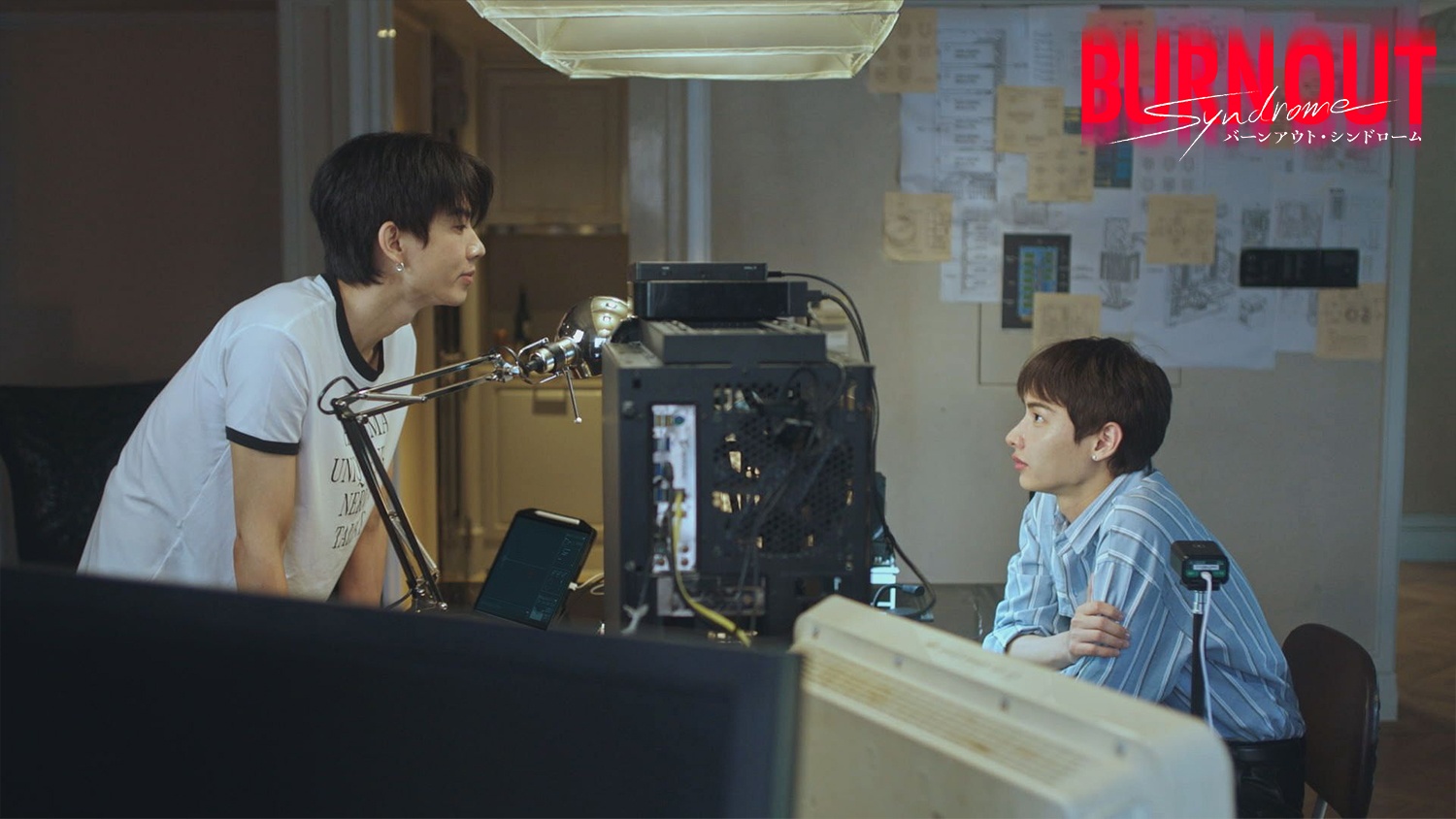
The difference is devastatingly present. There is no gothic punishment. Koh does not dramatically collapse under moral decay. He sells the AI and profits from it. His studio remains cluttered. His insomnia continues, relieved only by sleeping outside Jira’s apartment. The flame lilies outside his house are like an aesthetic penance.
Which brings me to the flowers.
Flowers vividly weave their way through the series, their bright colors shifting as emotions do. But it’s the flame lily that stands out most. Traditionally symbols of passion, glory, and dangerous beauty, they are also poisonous. In the final exhibition, when Jira unveils the painting of himself and Koh entwined above a bed of flame lilies, it hints at love elevated over something lethal. Desire knowingly choosing risk.
And it’s also at the exhibition that Burnout Syndrome truly hit home for me. As a writer and daughter of a troubled artist who passed away in 2013, the exhibition scene felt real and sad. Jira learns that most of his pieces haven’t been sold. His friend Ing (Emi Thasorn Klinnium) reminds him that many artists are only recognized after death. It reminded me of my father, of the paintings still sitting in the attic, the pain of his alcoholism and PTSD stained in them. I think all artists find themselves at the same crossroads, torn between the passion in them and the desire to capitalize off of it.
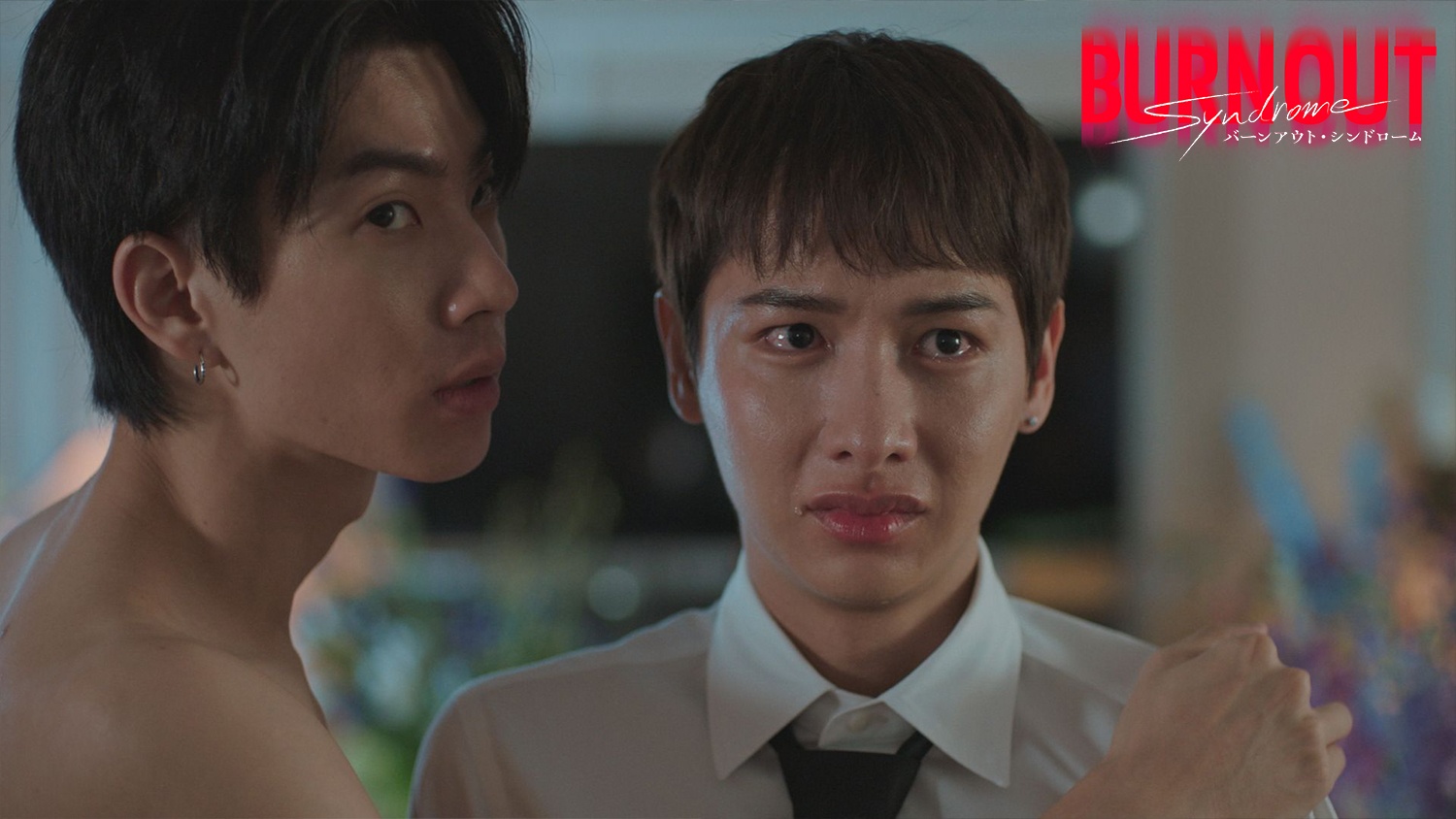
Jira stands at that crossroads between artistic integrity, financial survival, and emotional truth. When he ultimately brings the main painting, the one of him and Koh, directly to Koh, insisting he doesn’t want to sell it to anyone else, it doesn’t feel like giving up. It’s a choice that hurts. It’s uncertain and dangerous. Pheem was safer. A man who offered breath instead of fire. But what I love the most about Burnout Syndrome is that it understands something uncomfortable about desire. We’re often drawn not to what heals us, but to what consumes us. Wilde understood that too. Dangerous love has always been more intoxicating than gentle love.
That emotional tension wouldn’t resonate nearly as strongly without the deliberate hand behind the camera. Director Anucha Boonyawatana’s direction is brilliant. There’s a literary quality to the cinematography, a heavy intentional use of color, music, and art. The eroticism in Jira’s artwork (which was beautifully painted by artist Naisu) is vulnerable. When Koh trained AI on the images, it went beyond mimicry. In a way, it became digitized intimacy. The algorithm becomes a machine that consumes the soul of the artist without holding the weight of his humanity.
For me, that is the true burnout at the center of this story. Not just emotional exhaustion, but the exhaustion of being used. By the time Burnout Syndrome closes, it doesn’t end with redemption. Koh hasn’t miraculously become gentle or less capitalistic. His space is still chaos. His trust is still fractured. But Jira chooses him anyway. Not because he’s safe. But because they somehow recognize each other.
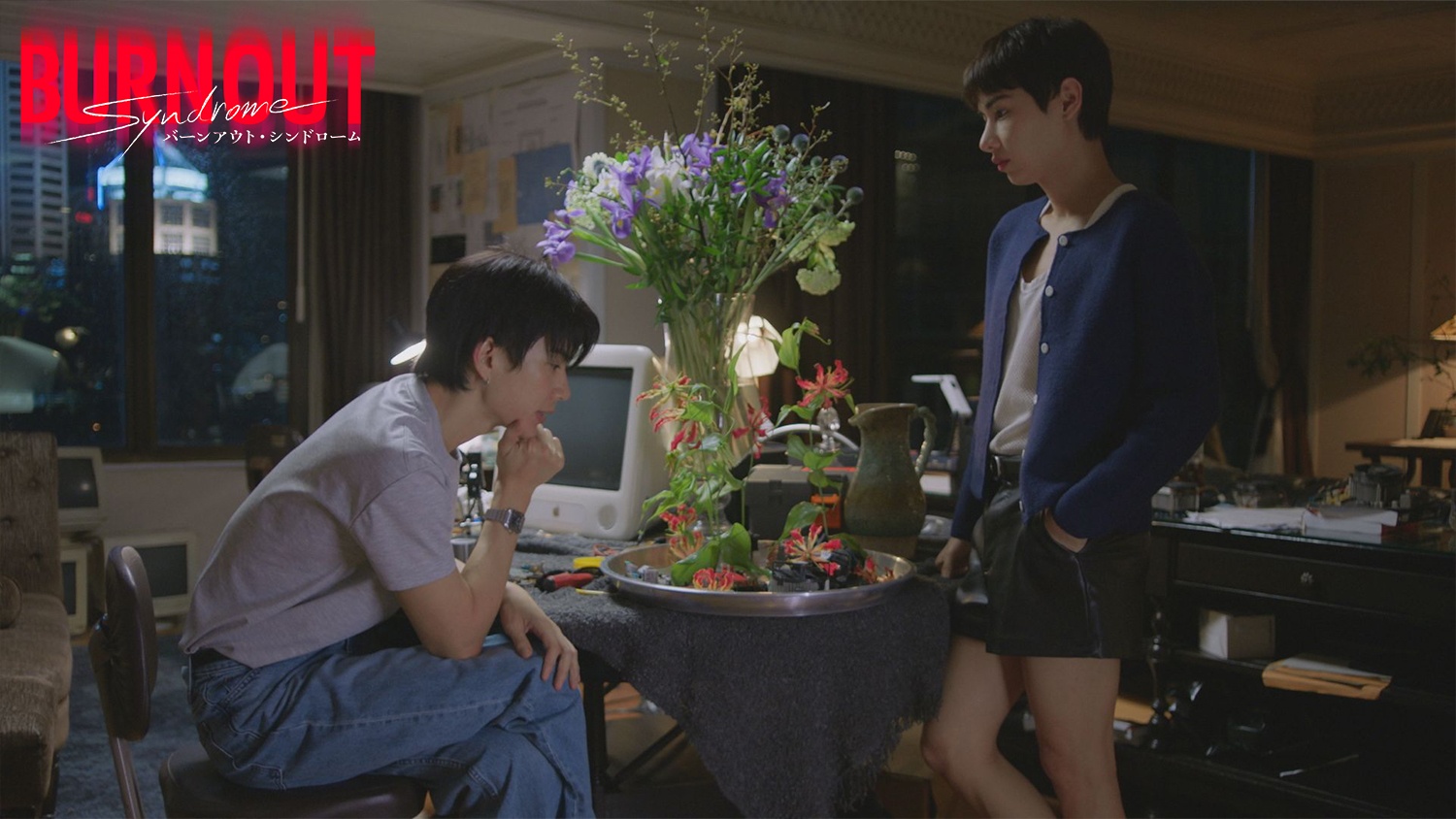
Burnout Syndrome is a reflection on art in the age of AI, on capitalism’s grip on creativity, on the thin line between inspiration and exploitation. It feels like standing barefoot among flame lilies while deciding if the risk is worth it. Maybe that’s the point. Maybe it’s not just about burnout. It’s about what we’re willing to burn for.
And that definitely left an impression on me.
For a series that delivers as many feels as it does heart, check out Burnout Syndrome now on iQiyi. It’s like standing in front of an abstract painting in an art gallery. What you get from it belongs entirely to the viewer watching it.
Rating- 5 out of 5


gorgeous review of a beautiful series.
LikeLike
I cannot give enough praise to Nuchy for crafting an ending that allowed the viewer to choose if they wanted it to be the typical GMMTV HEA or a conclusion that was much darker & sadder. You could argue that either one was the most logical.
As for the cast, any actor that looks down on their colleagues from the BL/GL world needs to watch this series. I’ve always admired Gun’s work, but Off bared all by (literally) showing us the fragility behind a emotionally walled-off, pretty unlikable character. Dew is very deserving of all the accolades he’s been receiving and AJ & Emi shouldn’t be forgotten since they were incredible in their roles, as well.
Honestly everything about this series was suburb. If this series doesn’t rate as a 5/5, there aren’t any that should earn that honor.
LikeLike