
Warning: this review might be long-winded, but, hell, they deserve it.
So, let’s do this.
It’s strange how life and love unfold, how the person meant for us is rarely the person we imagine.
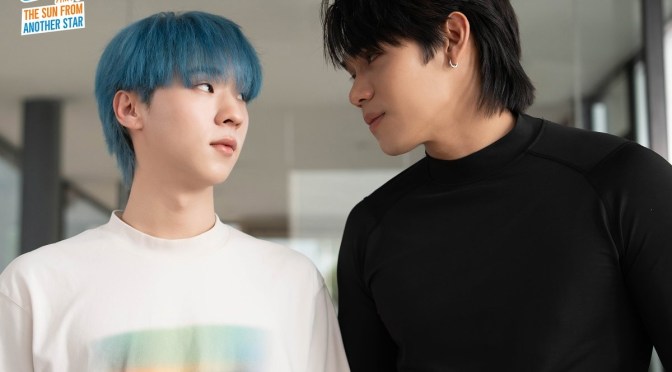
It’s this kind of unexpected romance that shapes the heart of Sun From Another Star, a Thai BL adapted from the novel of the same name by Howlsairy. The story follows Daotok (Oat Tharathon Phumphothingam), a soft-spoken, artistic boy who can communicate with ghosts, and his neighbor Arthit (Ngern Anupart Luangsodsai), a medical student who is quietly holding onto the grief of losing his mother.
Their worlds couldn’t be more different. Daotok is an introvert shaped by the spirits he sees and the emotions he absorbs, while Arthit is an extrovert grounded in spontaneity and easy connections. And yet, they also couldn’t be more alike. Both hide behind carefully crafted personas, concealing who they truly are and the scars they refuse to show. The series makes this tension between what makes them so different and so alike its focal point, allowing Arthit and Daotok’s initial frustration and disdain for each other give way to something far more intimate. In time, they become two people who need each other to breathe, to heal and, slowly, to understand one another in a way no one else can.
As part of the Fourever You series, Sun From Another Star doesn’t just hold its own, it distinguishes itself. It stands up, stands out, and yells, “Look at me!”
And, boy, did I look.
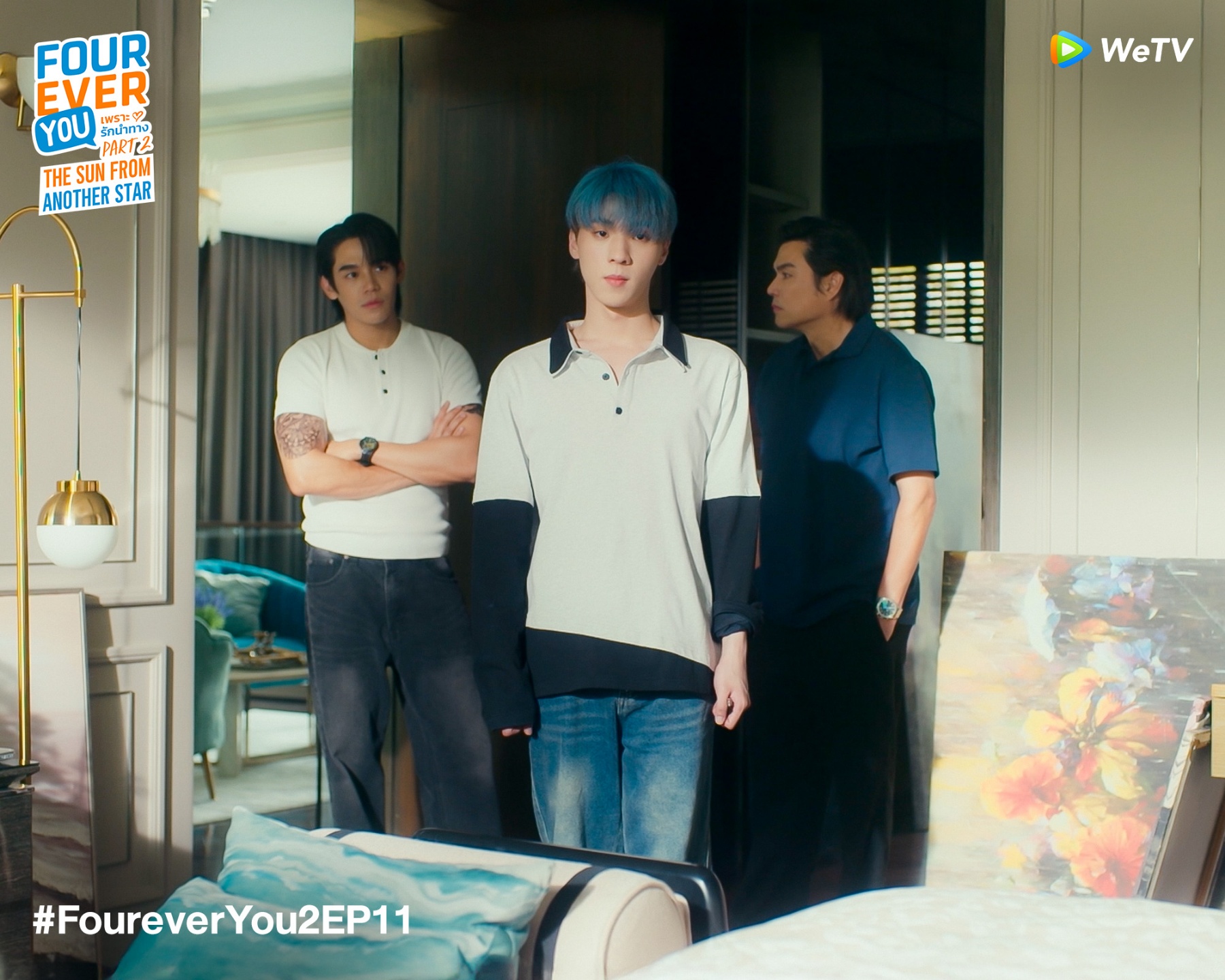
Arthit and Daotok could not have been cast more perfectly. Ngern and Oat don’t just step into these roles, they breathe life into them, down to the smallest facial expressions. Their connection on screen is absolutely electric, their chemistry carrying the intensity that highlights what makes Arthit and Daotok feel so inseparable.
And that’s what makes Sun From Another Star work so well. Because, at the end of the day, Arthit and Daotok are so compelling because they aren’t perfect. The series never shies away from the fact that Arthit fits the mold of a quintessential bad boy. He’s teasing and deeply affectionate with the few people he lets in, but he’s also spoiled, arrogant, and quick-tempered. Even though the drama softens him compared to the book, it never erases the traits that define him.
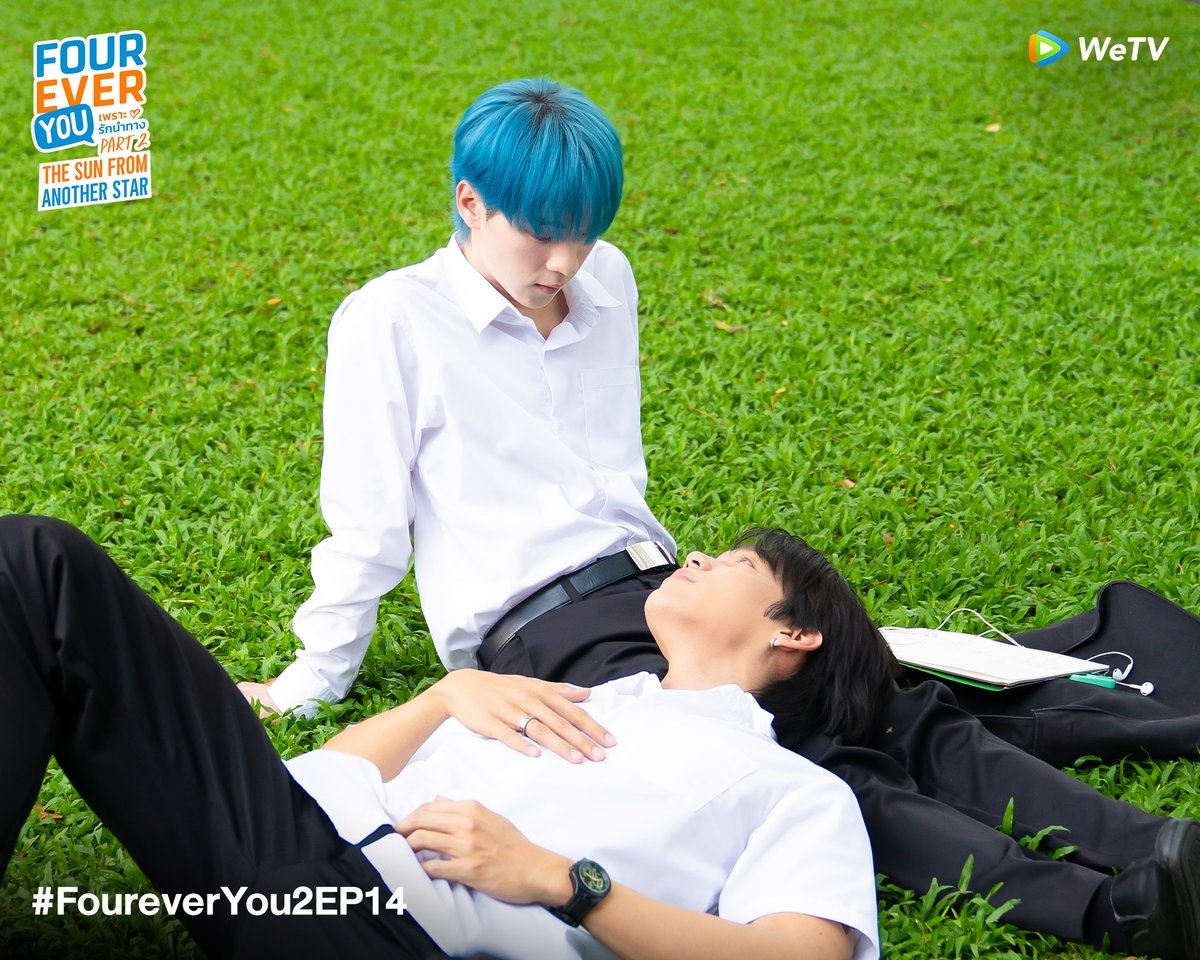
The same goes for Daotok. Around his friends, he appears quiet and composed, even rigid, but at home, that image slips away to reveal a streak of recklessness and edge he keeps carefully hidden. It’s something the series captures well, not just in how he handles Arthit in ways no one else can, but in small, telling moments: smoking on the balcony, impulsively dyeing his hair blue, and standing his ground when it matters.
Out of all the Fourever You couples, Arthit and Daotok are the only pair without a shared past. They’re drawn together through mutual friends, but it isn’t until they unexpectedly become neighbors that they truly come to know each other. In that space, away from familiar eyes, they begin to shed the versions of themselves their friends recognize, revealing who they really are when no one else is watching.
I’ll start with Daotok. He comes across as emotionless, but that distance is built from pain and loneliness. Betrayed by his first love and bullied as a child for his abilities, he learns early on to protect himself, especially his feelings. That isolation is what gives life to his imaginary friend, Emma, and it’s only when that loneliness begins to fade that she quietly disappears.
Daotok isn’t an easy character to portray. If anything, he may be the most difficult in the entire series. When I first started Fourever You, I’ll admit I wasn’t sure it could be done.
It can.
Oat does an incredible job bringing Daotok to life, not just in his own series, but across Fourever You as a whole. By letting the audience see Daotok through his friends’ perspectives over time, the series builds a layered understanding of who he really is. He’s a character of contradictions, arguably even more so than Arthit, and that complexity demands a lot of restraint.
Much of that burden falls on Oat’s performance. He conveys so much with his eyes alone, allowing emotion to surface without ever revealing too much too soon, at least until Daotok is with Emma, the spirits, or Arthit. And then he delivers unmasked moments that tie it all together.
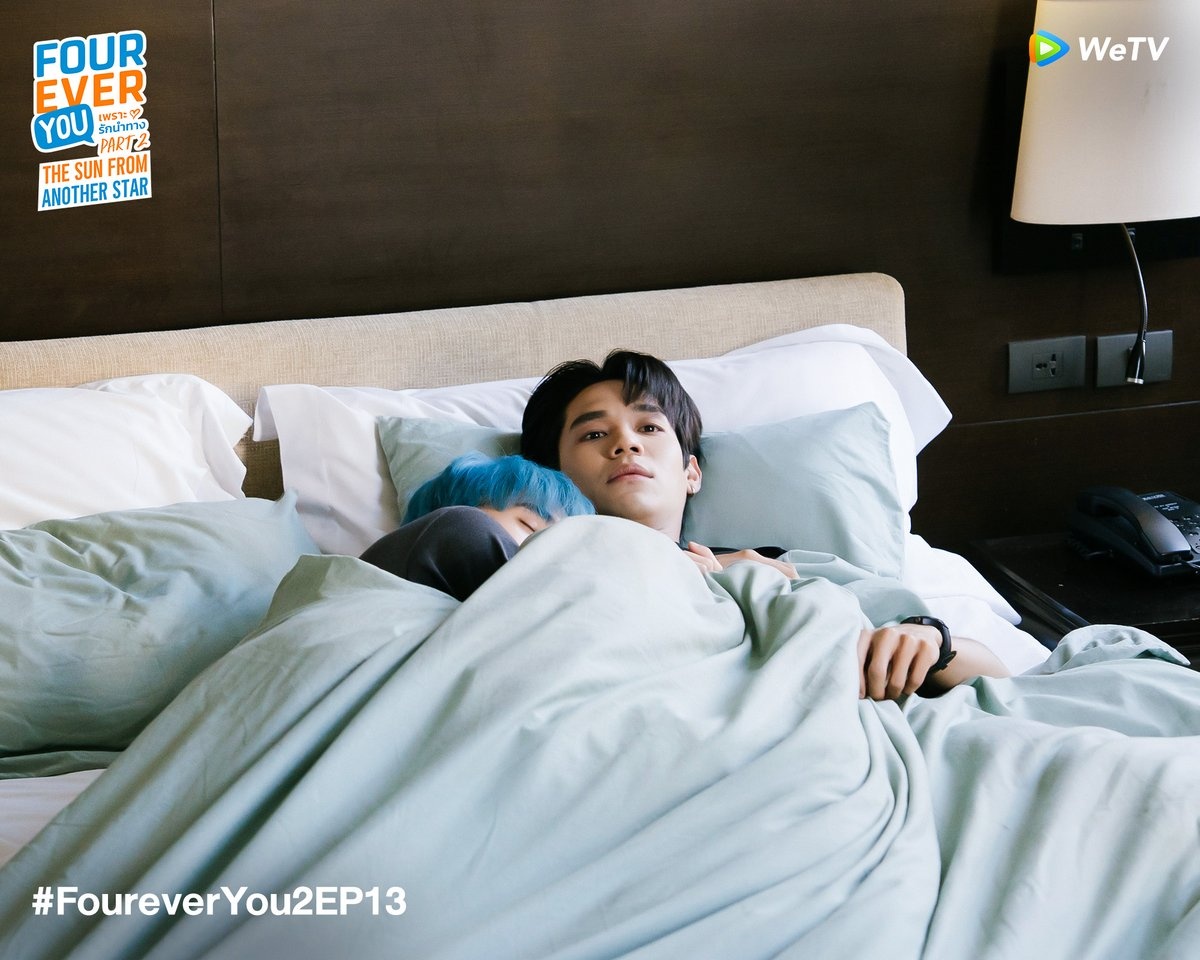
But it’s in the final stretch of Sun From Another Star that he shows just how well he’s shouldered it all. When Daotok finally breaks, when those carefully held walls collapse, the vulnerability he allows to surface is devastating. He truly wrecked me. The way he clings to Arthit after Arthit is injured, the small touches, and the raw openness he brings to their intimacy all make what Oat accomplishes across the series feel not only significant, but incredibly rewarding.
And then there’s Arthit. He’s the kind of character who manages to be lovable while still carrying just enough arrogance and irritation to push people away. Not because he’s inherently unlikable, but because that rough edge is essential to who he is. He’s brusque, unapologetic, and makes no effort to soften himself for anyone.
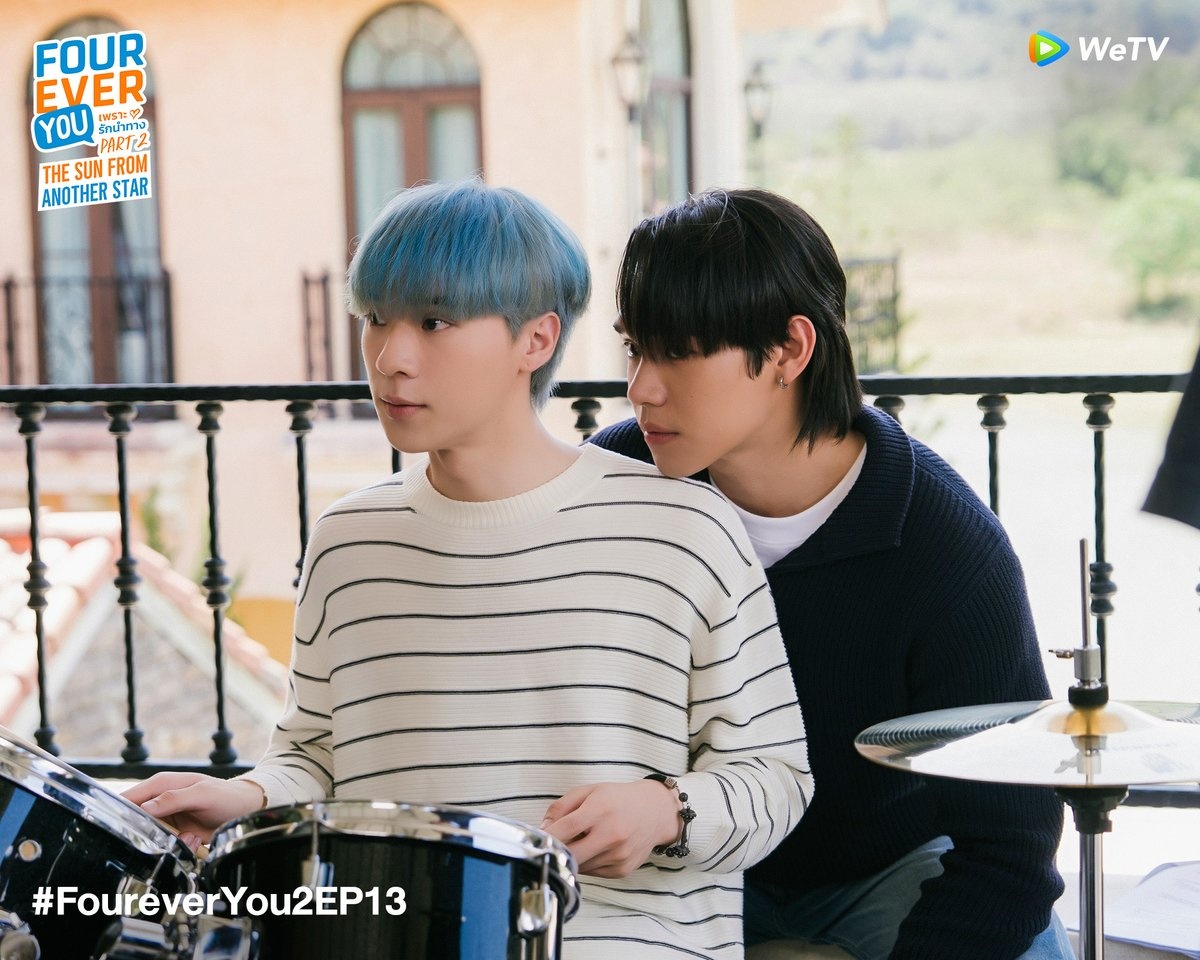
But it’s his vulnerability that gives him depth, the part of himself he keeps hidden from everyone except Daotok. That vulnerability is what ultimately binds him to the boy next door. While his search for closure over his mother’s death is what first draws him in, it’s allowing himself to be seen that changes everything. In opening up to Daotok, he begins to understand someone who has spent just as long hiding.
And that’s really the heart of it. In some ways, Arthit needs to be needed. The people around him are used to him depending on them, whether for money, schoolwork, or an outlet, but he rarely allows himself to be that person for anyone else. Not until Daotok.
Ngern, like Oat, does an exceptional job bringing Arthit’s complexity to life. It’s especially evident in Arthit’s restraint once he and Daotok enter that uncertain, in-between talking stage. Arthit never pretends to be a good guy, which makes the way he holds himself back around Daotok all the more meaningful. Daotok doesn’t just get him to listen, something no one else can quite manage, he steadies him. And that alone says a great deal about how deeply Daotok has taken root in Arthit’s heart.
And that’s where their dynamic becomes so incredibly difficult to look away from. And the reason why I kept thinking about them even after every episode ended. While Daotok can ground Arthit, he’s also just as inherently wild and passionate, something he’s never allowed anyone else to see. So when their relationship finally becomes official, Daotok doesn’t fade into the background nor does he shy away. He meets Arthit fully, never holding back, flirting and offering affection, giving and taking with the same intensity as Arthit, and matching Arthit in a way no one else ever has.
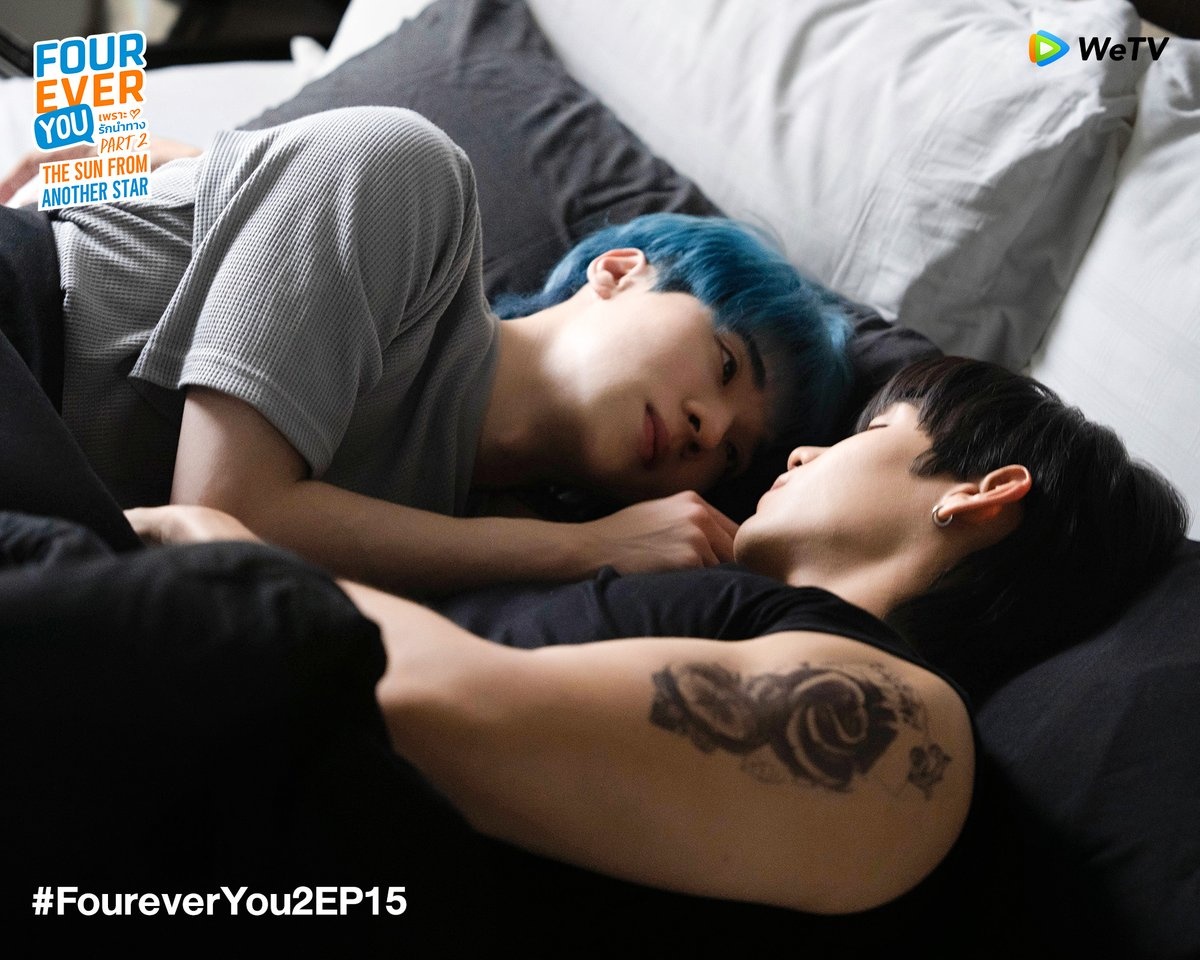
And that raw lack of inhibition comes through in full force. It may sound unusual, but part of what makes Arthit and Daotok’s love scenes so insanely well done is that they aren’t polished. In an industry where even the most passionate moments can feel overly curated—where couples still look like they’ve stepped out of hair and makeup—this series chooses to be raw in the best way possible.
With Arthit and Daotok, there’s no such gloss. There’s disheveled hair, flushed skin, desperation, and unguarded expressions. Every detail suggests they’ve surrendered completely to the moment. And that, more than anything, feels true to who they are. When it matters most, they are messy with each other and for each other. The love scenes don’t exist for spectacle; they become an extension of everything the story has been building toward: two people learning to let go, and, in doing so, letting each other in.
And it shook me to the core because of that.
All of that to say, “Bravo!” I genuinely hope Ngern and Oat understand just how fully they brought these roles to life, and how devastating it is to have their story come to an end. I’m going to need both of them in leading roles again. And soon.
And if the people behind this series want to slip in a special episode, I definitely wouldn’t be mad.
But before I get too carried away praising their performances, the supporting cast deserves just as much recognition. The parents in Sun From Another Star might be my favorite portrayal of family in any drama to date. From the support Daotok receives from his fathers and grandmother to the teasing yet deeply affectionate dynamic Arthit shares with Direk (Jab Penpetch Benyakul), every relationship is genuine and essential. Because what this series captures so well is that even the most loving, supportive families can’t shield someone from loss or trauma. What they can do is offer a safe place to return to while those wounds are slowly understood, and, in time, begin to heal.
That same sense of support extends beyond family to the rest of the supporting cast, particularly the ghosts and the external relationships woven into Arthit and Daotok’s story. They bring moments of subtle humor, but also an emotional depth that only adds to the main story.
Then there’s Meen (Kiwi Ratchaneeboon Pheinwikraisophon) and Donut (Win Thanakom Minthananan), whose arc shows just how deeply love can shape, and sometimes haunt, a person (I cried). Their story also reveals new layers of Arthit and Daotok, allowing each of them to see the other more clearly, while also highlighting Arthit’s fear of commitment which is rooted in the fear of losing someone he loves.
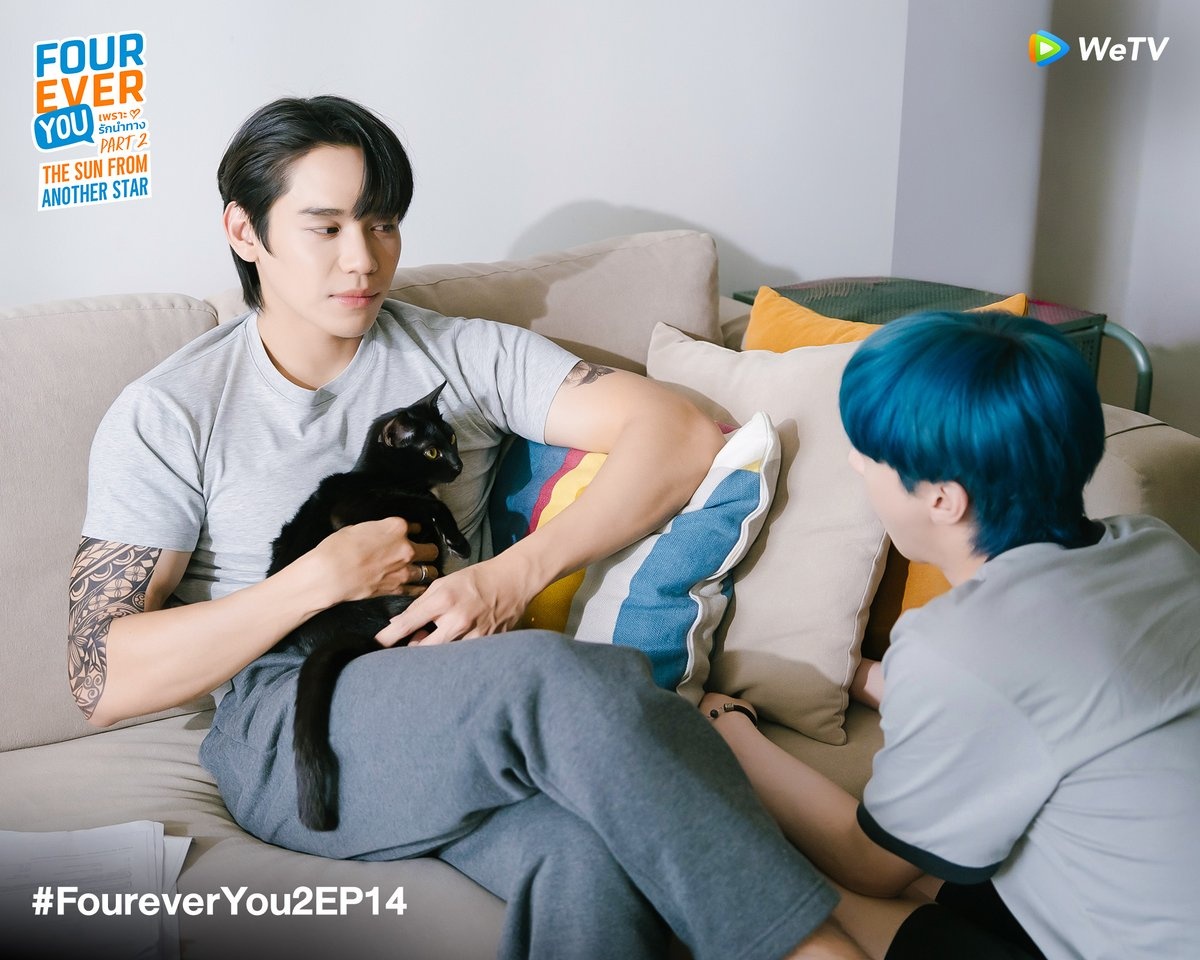
I rarely give dramas a five-star rating. I tend to believe there’s always room for growth, always something that could be refined. And Sun From Another Star is no exception. There are moments where transitions feel abrupt, where the ghosts appear more tangible than unseen, and a few odd editing choices—like the random still of John the cat in Arthit’s lap—that briefly pull you out of the scene. There definitely also needed to be at least one more episode to round things out fully.
But even with those imperfections, this is a five-star series.
Because every actor commits to their roles, bringing their characters to life in a way that feels complete. And Ngern and Oat, in particular, never hold back. Maybe it comes from living with these roles through the other parts of Fourever You, but the greatest compliment I can give them is this: they step so fully into Arthit and Daotok with no hesitation whatsoever that, at some point, you forget they were ever fictional at all. When the performances reach this level, the flaws in the series begin to fade into the background. What stays with you instead is the honesty of what’s being portrayed.
All in all, Sun From Another Star is a perfect addition to the Fourever You series, continuing its ability to tell a story within a story. While it centers on Arthit and Daotok and the world they build with and for each other, it never loses sight of the relationships and friendships cultivated throughout Fourever You that give the series its strength.
Because in the end, it’s the people in this world that makes each of them stand out. Every character finds a way under your skin, settles into your heart, and, somehow, makes a home there.
And that is reason enough to watch.
Check Sun From Another Star out now on Tencent Video/WeTV.
Rating- 5 out of 5

