

Very rarely is everything exactly as it seems. Growing up, my mother used to say there are always three sides to every story: yours, theirs, and the truth somewhere in between.
Nowhere does that feel more apparent than in the Thai GL Broken (of) Love.
At first glance, the series presents itself as a fairly straightforward revenge romance. Arisa Kulnavee, also known as Keetraphat, played by Faye Peraya Malisorn, is determined to destroy the life of Zhang Wei Ling (Nina Yarinda Bunnag), the woman she believes is responsible for her parents’ deaths. Her plan is cold, calculated, and carefully constructed around dismantling Wei Ling piece by piece, including targeting the person Wei Ling treasures most: her daughter Lalin, also known as Lyla, portrayed by Atom Pariya Piyapanopas.
The problem, of course, is that Arisa falls in love with her long before the truth is revealed.

One of the things I appreciated most about Broken (of) Love early on was that the romance itself never felt like part of the manipulation. Arisa doesn’t approach Lalin intending to fall for her. The relationship catches her off guard, and because of that, the emotional tension works far better than it otherwise might have. What begins as revenge slowly becomes tangled up in guilt, vulnerability, and genuine affection, forcing Arisa into emotional territory she never planned for.
As the series progresses beyond its opening episodes, the story shifts rapidly from one revelation to another. Some plot twists are admittedly more predictable than I would have liked, particularly for viewers familiar with revenge-driven melodramas, but I did appreciate how the truth surrounding Arisa’s mother ultimately reframes the story. The further Arisa digs into the past, the more she’s forced to confront the reality that vengeance built on incomplete truths can destroy far more than it heals.
Rather than diving deeply into spoiler-heavy territory, I think Broken (of) Love works best when discussing what emotionally succeeds and where the writing occasionally struggles to support its strongest ideas.
And honestly, Atom Pariya Piyapanopas is far and away the series’ greatest strength.
From the moment Lalin appears onscreen, Atom gives her the emotional depth needed to naturally draw both Arisa and the audience toward her. From the warmth she exuded to the emotions she expressed and the passion she conveyed, she truly brought Lalin to life. So much so, it honestly made most of the other characters fade to the background for me.

In many ways, Lalin becomes the emotional anchor of the entire drama. She’s the one pulling emotional truths to the surface, connecting fractured relationships, and carrying much of the vulnerability that gives the story its weight. Atom handles all of that beautifully.
Ironically, though, that strength also became one of my biggest frustrations with the writing itself.
Lalin ends up doing too much of the heavy lifting.
At times, it felt less like the story allowed Arisa to actively uncover the truth herself and more like Lalin existed as the mechanism that revealed everything for her. While I understand why Lalin’s role was important in bridging the emotional distance between Arisa and Wei Ling, I think the story would have been far more impactful had Arisa been forced to unravel those truths herself. Considering how much anger, grief, and obsession Arisa carried for years, allowing her to independently confront the cracks in her own narrative would have made her emotional growth feel more satisfying.
Especially because Arisa begins the series with such compelling strength.
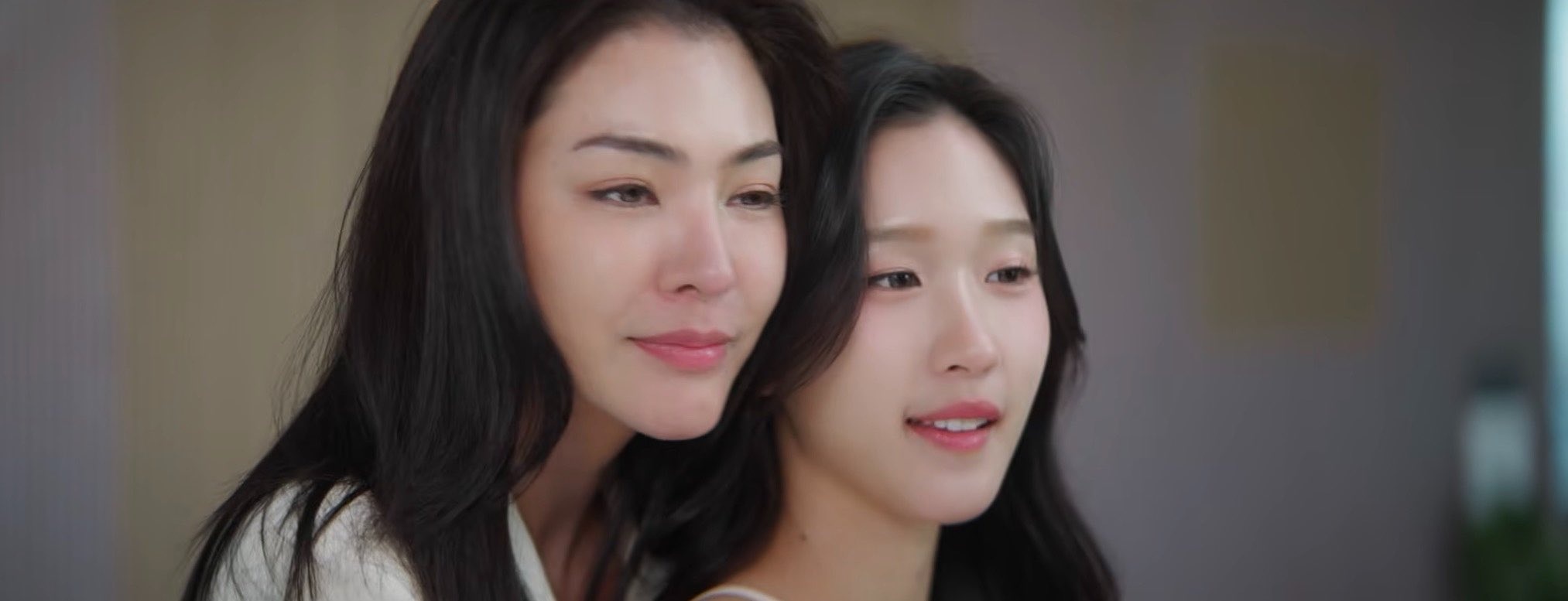
That said, I was genuinely impressed by the chemistry between Faye and Atom during the more intimate moments of the series. The love scenes are passionate, emotionally charged, and handled with a surprising amount of tenderness. There’s real vulnerability present in those moments, and both actresses sell the emotional and physical connection extremely well.
Oddly enough, though, outside of those romantic scenes, the chemistry loses some of its strength. Personally, I think that issue stems less from the performances themselves and more from the script.
Even so, Broken (of) Love still delivers an engaging story layered with romance, betrayal, family secrets, and emotional conflict across multiple GL relationships. I only wish the series had given itself more time to fully develop its characterization and emotional reveals rather than condensing so much of its resolution into its final episodes.
I also found myself surprisingly invested in the romance between the mothers and wished the secondary relationships had been explored with the same depth and patience given to the main couple. There’s enough emotional material there to have made this series longer and more filled out.
Still, despite my criticisms, I don’t regret watching Broken (of) Love at all. If anything, series like this continue to show how much potential exists within the growing GL market. With every new release comes the hope that these stories will continue evolving, expanding, and receiving the same level of investment and visibility that BL dramas have enjoyed for years.

And at its core, Broken (of) Love ultimately becomes a story about how dangerous it can be to weaponize love in pursuit of revenge, while also reminding us that love itself can still become the thing capable of breaking cycles of anger and grief if people allow it to.
For a GL drama filled with romance, revenge, emotional twists, and layered family conflict, Broken (of) Love is worth checking out.
You can watch it now on the Fabel Entertainment Youtube Channel.
Rating- 3 out of 5

