
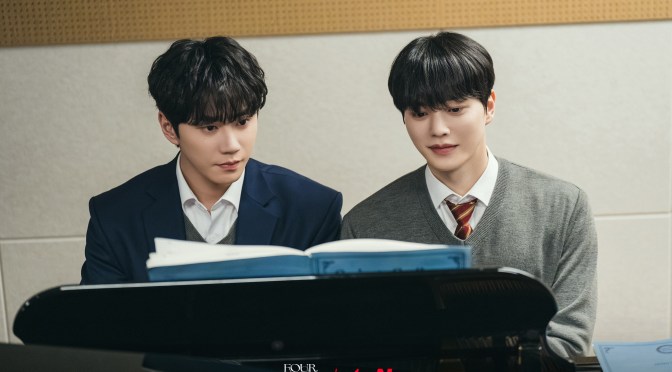
The greatest romances in history often breed redemption, though revenge is an uncertain ballgame!!
There are very few stories that leave a deeply profound impression on your psyche; “Four Hands, Two Sonatas” is one such masterpiece. It isn’t your typical macabre romance; in fact, people are still debating if this show falls under the normal spectrum of BL/queer love stories. We are here to answer this question, while minutely dissecting every piece of evidence that points to the emotional connection between the main leads. Many believe they were simple good friends; others argue that they are soulmates. Song Kang & Lee Jun Young’s electrifying chemistry was gratifying; whenever they were onscreen, the world seemed to dim in comparison. This being Song Kang’s first project after his military discharge, he seems to have deliberately chosen a project that conveys emotional turmoil, as against his earlier projects. While Song Kang steps back into the limelight, this was Lee Jun Young’s last project before he left for his mandatory military service. Known for his negative roles, Lee Jun Young was probably chosen due of his ability to portray morally gray characters.
The Storyline
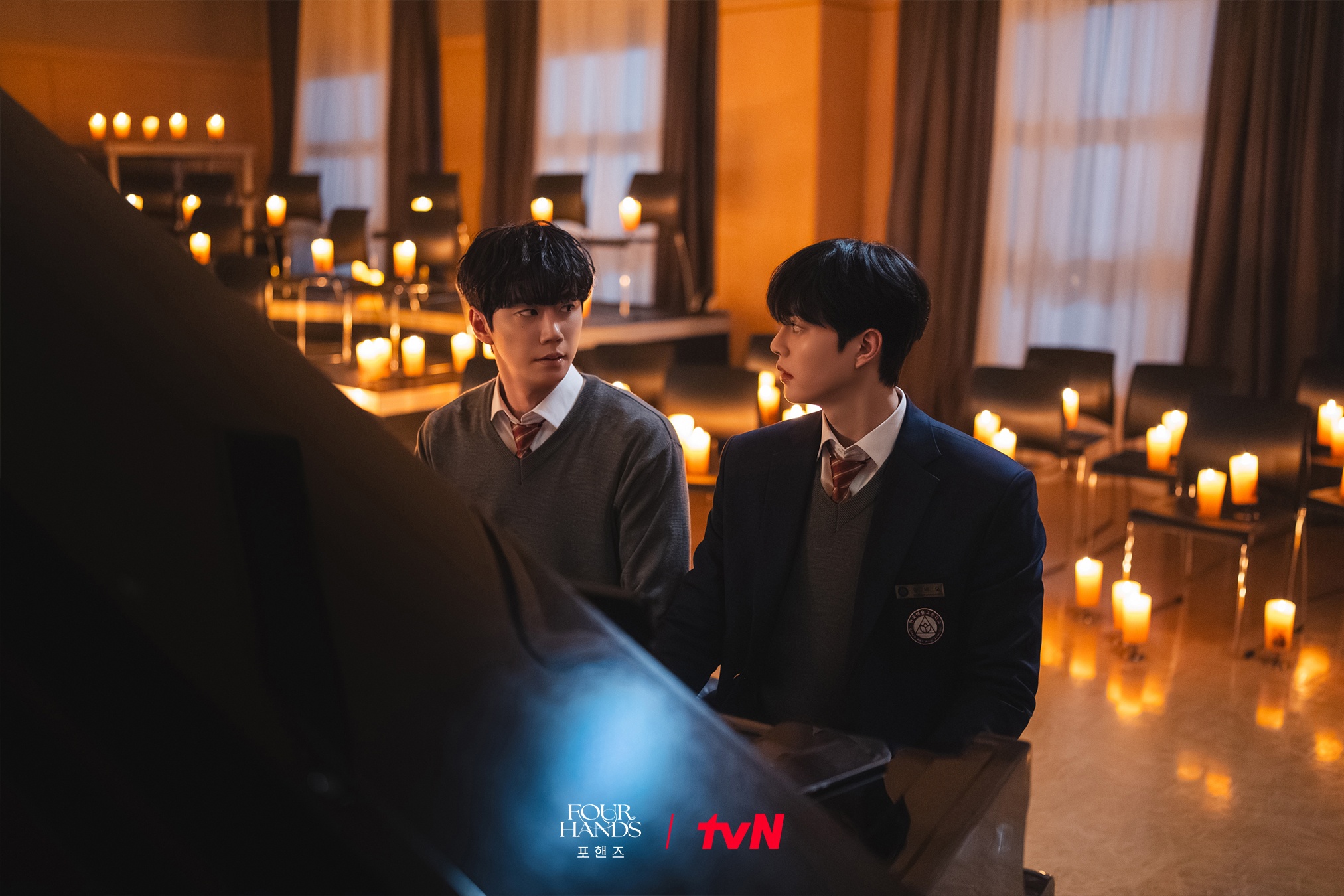
Piano prodigy Kang Pi O (Song Kang) is consistently ranked first in both academics and performance. As the only grandson of mastreo Kang Seung Un (Jung Jin Young), he carries the heavy burden of being a perfectionist. He is anguished by the heavy expectations set by his mother, Kang Si Hye (Yoon Se Ah) who is hellbent on impressing her father. As such, though he plays perfectly, Pi O’s music lacks any emotional stability. Praised as a future star destined for the world’s top competitions, his steady path begins to shake when he encounters an unexpected rival, Choi Jeong Yo (Lee Jun Young). Choi Jeong Yo, is a gifted pianist who abandoned his talent after his mother’s sudden death. Impressed by his raw talent, Pi O’s grandmother, Yun Seon Ju (Seo Jae Hee) grants him a scholarship and as such, they cross paths.
They butt heads insistently until Pi O’s teacher, Do Hyeon Su (Kim Joo Heon) suggests that they should play “Four Hands” to hone their skills. Initially skeptical about his teacher’s suggestion, Pi O starts training with Jeong Yo to realise that they work better whenever they play “Four Hands” together. Pi O pulls Jeong Yo out of his emotional flunk & gives him the courage to play on-stage. Jeong Yo’s friendship adds the much- needed emotions to Pi-O pale connotations. They form a deep connection until they are repeatedly pitted against each other and Jeong Yo goes missing at an international competition.
Feeling guilty, Pi O searches for Jeong Yo for nine years and finally finds him at an international event where Jeong Yu debuts as a conductor. When they meet again, Jeong Yu lies about being amnesiac & treats Pi O like a stranger. They return to South Korea and Jeong Yu joins the local harmony as a conductor, so he could get closer to Pi O and extract revenge. He is ruthless in his approach as he firmly believes that Pi O was behind his abduction. When Pi O learns the truth that his mother ordered the abduction, he submits to his fate. He pours his heart into delivering an unimaginable performance of the song composed by Jeong Yu and later surrenders to the police.
Atoning for her sins, Pi O’s mother accepts her mistakes and she is imprisoned. At his last refuge, Jeong Yu persuades Pi O to continue playing music for fun before disappearing from his life. Pi O continues searching for his soulmate. Three years later, they reunite as Pi O travels to the Czech Republic to reunite with the man who changed his world.
The Chemistry
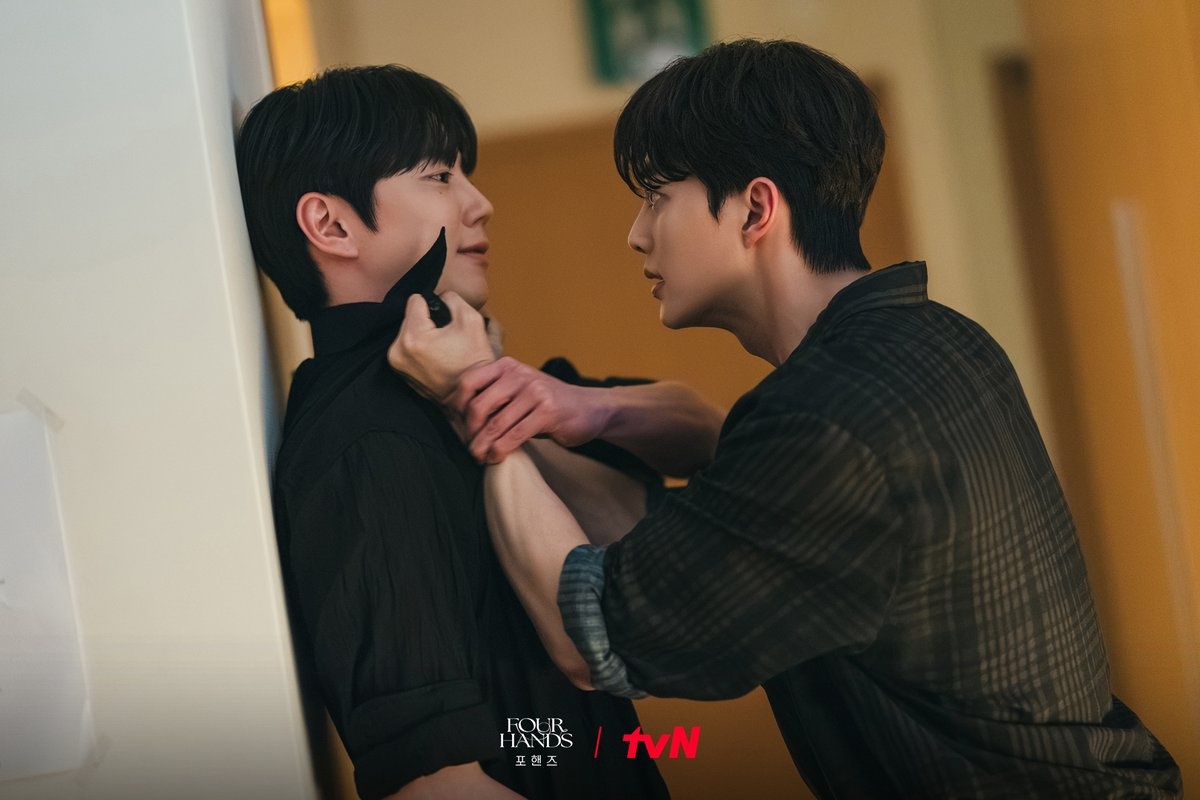
A day before the penultimate episode premiered, screenwriter Shin Yi Won reacted to questions concerning the relationship between Pi O and Jeong Yu. Were they in a romantic relationship or was it purely friendship?
Once the show aired, viewers were captivated by the deeply emotional bond between the two characters, a connection that transcended the simple label of “friendship.” The relationship was so poignant—rivaling that of many romance dramas—that some even interpreted it through the lens of the “BL” (Boys’ Love) genre.
Responding to this enthusiastic reception, Director Park Hyeon Seok remarked, “It brings immense happiness and gratitude to the entire production team to see viewers enjoying the drama through their own diverse perspectives.” He added, “We are truly grateful that they fill the spaces between the writer’s script and the visual scenes with such rich interpretations.”
The relationship between Mozart and Salieri—a defining narrative in 18th-century music history—has become synonymous with feelings of inferiority and a complex mix of love and hate. Salieri, who held the prestigious position of court Kapellmeister and possessed consummate skill, fell into deep despair and self-loathing after encountering the music of Mozart, a man gifted with innate, divine genius. The tragedy of Salieri—whose very ability to recognize genius forced him to confront his own limitations—has been reimagined in the story of “Four Hands”, specifically through the school-day experiences of its characters, Pi O and Jeong-Yo.
The reason the narrative of Pi O and Jeong-yo elicits reactions like “more poignant than most romances” is that the emotional trajectory they experience mirrors the moments of love and heartbreak found in real-life relationships. Having grown up in vastly different environments, the two friends build a bond through the medium of the piano, navigating a complex dynamic where they deeply cherish yet remain wary of one another. After a heart-wrenching nine-year separation, they reunite—but because they harbor deep misunderstandings about each other, they suppress their joy and instead pour out the accumulated anguish of the past years through tears, anger, and vengeance.
To craft this unique relationship, author Shin Yi-won drew significant inspiration from Emily Brontë’s novel “Wuthering Heights” and the 2011 film adaptation directed by Andrea Arnold.
Writer Shin projected the image of Heathcliff, a lone wolf roaming the wild—onto Jeong Yo, while imbuing Pi O with the traits of Catherine, cold, cynical, and seemingly impenetrable. In “Four Hands”, even though Pi O grew up in a wealthy environment, his family never once offered him a sense of comfort; meanwhile, Jeong Yo had to let go of Pi O—the only person who had truly felt like family to her. Ultimately, because they were each other’s only sanctuary, their bond was inevitably inseparable.
Writer Shin Yi-won revealed that she listened to “On the Nature of Daylight” by contemporary classical master Max Richter on repeat while writing the script. Released in 2004, this piece is a modern classical masterpiece in which cold, poignant string melodies are layered over a heavy bassline. It has been used in films such as “Arrival” and “Shutter Island” to convey profound loss, sorrow, and complex emotional climaxes. Shin was also deeply moved by a comment left on the track:
“A hungry wolf loves the sheep.” Instinctively, a wolf views a sheep merely as prey to satisfy its hunger; yet, the moment it falls in love with that sheep, it becomes trapped in a contradiction between desire and love. Jeong Yo faces a similar dilemma. Pi O stands at the end of the path of vengeance that has sustained Jeong Yo for the past nine years; yet, the more Jeong Yo attempts to destroy him, the more he is forced to confront the fact that he still cherishes Pi O. Pi O is, in essence, both the target of his revenge and someone he cannot bear to lose.
By superimposing Jeong-yo’s dilemma—an inability to harm the one he loves or let go of the one he hates—onto the image of a “hungry wolf,” the author has crafted a deeply resonant narrative of vengeance and the complex, love-hate bond shared with Pi O.
You can draw your own conclusions from this, but we firmly believe that Jeong Yo was indeed very much in love with Pi O.
A Testimony of Love & Hatred
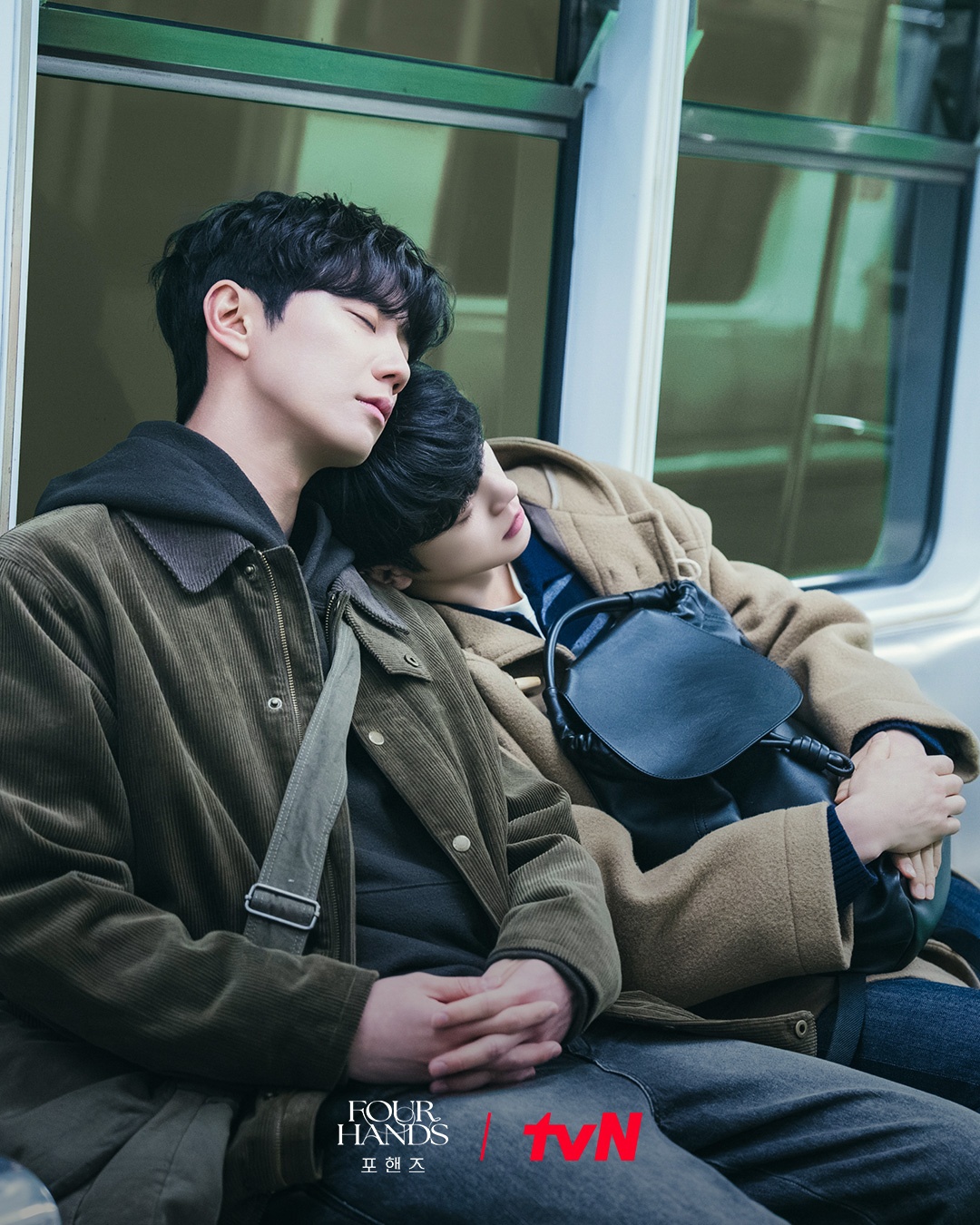
“You just came out of nowhere and stormed into my miserable life. You made me ashamed of how I refused to take music seriously. I was drowning in my trauma but you pulled me out. Looking back, when I was lost in despair, you were the one who pulled me back into music.
Whether you meant to be or not, you were my light and hope.
Even when I was consumed by revenge…I’d fall asleep dreaming of playing Four Hands with you”
Lee Jun Young & Song Kang rewrote history by creating a music resonance that will stay with the audiences for time immemorial. The ingenuity of this romance is indescribable, it cannot be expressed in words. It consumes you entirely and leaves you feeling empty. You need to experience this musical sojourn to understand the complexity of their characters and the love they had for each other. We don’t know if Pi O and Jeong Yo got their “Happily Ever After”. We are just happy that our favorite characters are still alive and that they found their way back to each other!!
Rating- 5 out of 5
Streaming on- Netflix
(Source for Writer Shin’s hypothesis- Naver)


This series is a truly amazing story of two young men who was reconnected thru the love of music. I’m so glad I had the chance to watch it it pulled at my heart in do many ways it hard to explain but I would watch it again it’s a worthy storyline. Thank you for bringing it to life.
LikeLike
I loved this drama, and I rewatched it after finishing it to catch details and reflect more deeply on everything.
It is a great story of friendship and love, intertwined with rivalry, jealousy, misfortune, guilt, heartbreak, longing, and a love for music. In the end, you realize that they love music as much as life itself, and they love each other just as they love music.
It is a story with many layers and overlapping themes.
LikeLike